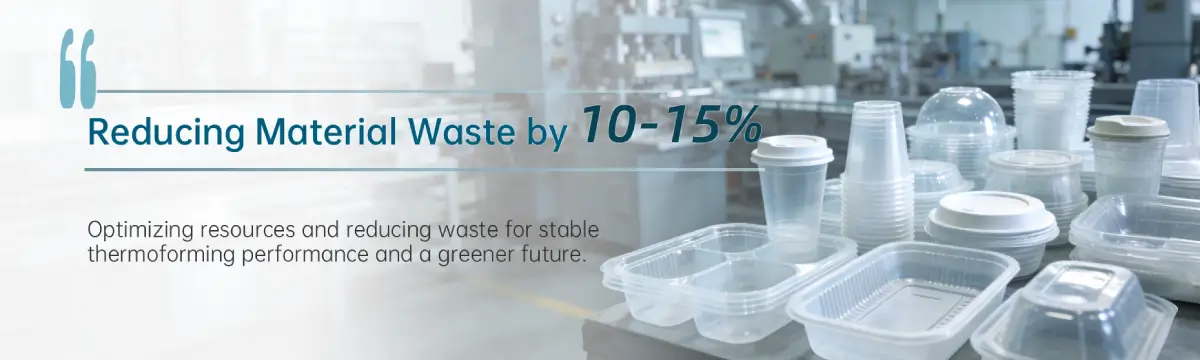
Thickness tolerance in PET sheet rolls directly impacts heating consistency, forming stability, and scrap rate in thermoforming food packaging applications.
Thickness Is a Process Variable, Not Just a Specification
Thickness is often listed as a nominal value, but in thermoforming, tolerance control matters more than the number itself.
A 0.6 mm PET sheet with poor tolerance can perform worse than a 0.5 mm sheet with stable thickness distribution.
How Thickness Variation Affects Heating
In thermoforming, PET sheets must reach a controlled softening range. Thickness variation causes uneven heat absorption, leading to:
- Overheating in thin areas
- Incomplete forming in thicker zones
This results in inconsistent cavity definition and unstable cycle times.
Impact on Wall Thickness Distribution
Uneven sheet thickness before forming translates into unpredictable wall distribution after forming. This affects:
- Structural integrity
- Appearance consistency
- Sealing reliability
For food packaging, these issues directly influence quality acceptance.
Thickness Control During Extrusion
From a manufacturing perspective, thickness consistency depends on:
- Stable extrusion parameters
- Continuous inline monitoring
- Controlled cooling and calibration
Corrective actions must be applied during production, not after winding.
Why Buyers Should Specify Tolerance, Not Just Thickness
Buyers often specify thickness but omit tolerance limits. This creates ambiguity and increases procurement risk.
Clear tolerance expectations improve alignment between supplier and processor.
Practical Evaluation During Trials
During material trials, buyers should monitor:
- Heating window stability
- Scrap rate over extended runs
- Need for parameter adjustments
Short trials may not reveal long-term thickness-related issues.
Conclusion
Thickness tolerance plays a critical role in thermoforming stability. PET sheet rolls that maintain consistent thickness across batches support predictable production and reduced process risk. Stable PET sheet roll supply for thermoforming packaging