Quick Answer
Common defects in thermoforming PET sheet include webbing, bubbles, poor detail, whitening, and uneven thickness. These issues are mainly caused by incorrect temperature, improper IV selection, uneven heating, or poor mold design.
What Are Common Thermoforming Defects in PET Sheet?
Thermoforming defects refer to visible or structural problems that occur when PET sheet is not processed under optimal conditions.
These defects directly affect:
- product quality
- production efficiency
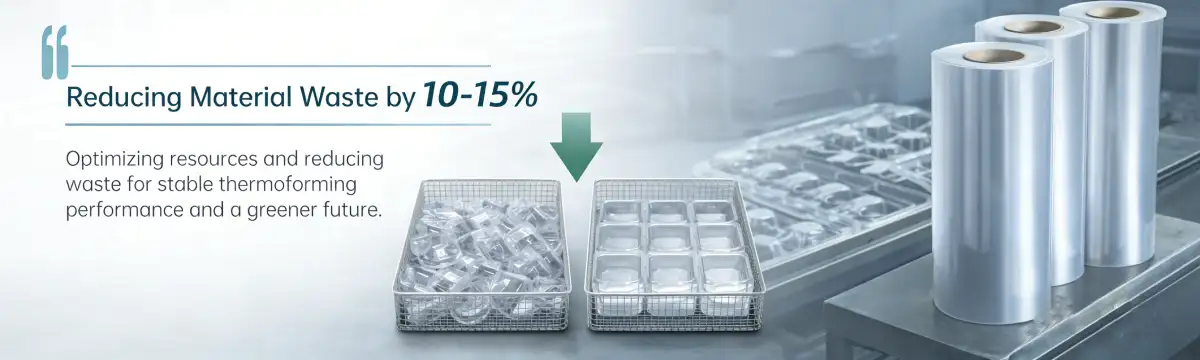
- material waste
👉 In summary: Most PET thermoforming defects are caused by mismatched material and processing conditions.
Common PET Thermoforming Defects Overview
| Defect | Main Cause | Solution |
|---|---|---|
| Webbing | Overheating / poor mold design | Reduce temperature, improve mold |
| Bubbles | Moisture / overheating | Pre-dry material, lower temp |
| Poor Detail | Low temperature | Increase heating |
| Whitening | Overstretching | Adjust temp & forming speed |
| Uneven Thickness | Poor sheet quality | Use consistent PET sheet |
Most Common Defects Explained
1. Webbing (Most Frequent Issue)
What it looks like:
Unwanted folds between formed areas
Main causes:
- Excessive temperature
- Improper mold spacing
👉 In summary: Webbing is mainly caused by overheating and poor mold layout.
2. Bubbles
What it looks like:
Air pockets or blisters inside the material
Main causes:
- Moisture in PET sheet
- Overheating
👉 In summary: Bubbles are usually caused by moisture and excessive heat.
3. Poor Detail / Incomplete Forming
What it looks like:
Rounded edges, missing details
Main causes:
- Temperature too low
- Insufficient forming pressure
👉 In summary: Low temperature leads to poor mold replication.
4. Whitening (Stress Marks)
What it looks like:
White marks in stretched areas
Main causes:
- Overstretching
- Low temperature during forming
👉 In summary: Whitening occurs when PET is stretched beyond its limit at improper temperature.
5. Uneven Thickness
What it looks like:
Thin spots in corners, thick areas elsewhere
Main causes:
- Inconsistent sheet thickness
- Poor material distribution
👉 In summary: Thickness variation is often a material consistency issue.
Root Causes Behind Most Defects
1. Incorrect Temperature
- Too high → webbing, bubbles
- Too low → poor forming
👉 In summary: Temperature mismatch is the #1 cause of defects.
2. Wrong IV Selection
- Low IV → tearing, weak structure
- High IV → difficult forming
👉 In summary: IV must match forming requirements.
3. Poor Heating Uniformity
- Uneven heating → uneven forming
👉 In summary: Uniform heat distribution is critical.
4. Mold Design Issues
- Sharp corners
- Poor venting
👉 In summary: Mold design directly affects defect formation.
Factory Insight (15 Years Experience)
From practical production experience:
- Over 60% of defects are related to temperature control
- Around 25% come from material inconsistency (IV + thickness)
- The rest are caused by mold and machine factors
👉 In summary: Most defects can be prevented by selecting the right PET sheet and controlling temperature properly.
How to Prevent Thermoforming Defects (Procurement Guide)
When sourcing PET sheet, ensure:
- Stable IV range
- Tight thickness tolerance
- Low moisture content
- Consistent extrusion quality
👉 In summary: Choosing the right supplier is the first step to reducing defects.
Defects vs Process Relationship
- Material issue → thickness variation
- Temperature issue → surface defects
- Mold issue → structural defects
👉 Best performance comes from:
Material + Temperature + Mold alignment
FAQ
Q1: What is the most common thermoforming defect in PET sheet?
A: Webbing is the most common defect, usually caused by overheating.
Q2: Why do bubbles form in PET sheet during thermoforming?
A: Due to moisture in the material or excessive heating.
Q3: How can I prevent thermoforming defects?
A: Control temperature, use consistent PET sheet, and optimize mold design.
Q4: Does PET sheet quality affect defects?
A: Yes. Poor thickness consistency and unstable IV increase defect risk.
Q5: Can defects be completely eliminated?
A: Not entirely, but they can be significantly reduced with proper control.
Final Conclusion
Thermoforming defects in PET sheet are mainly caused by improper temperature, incorrect IV selection, and inconsistent material quality. By optimizing these factors, manufacturers can significantly improve product quality and reduce production waste.