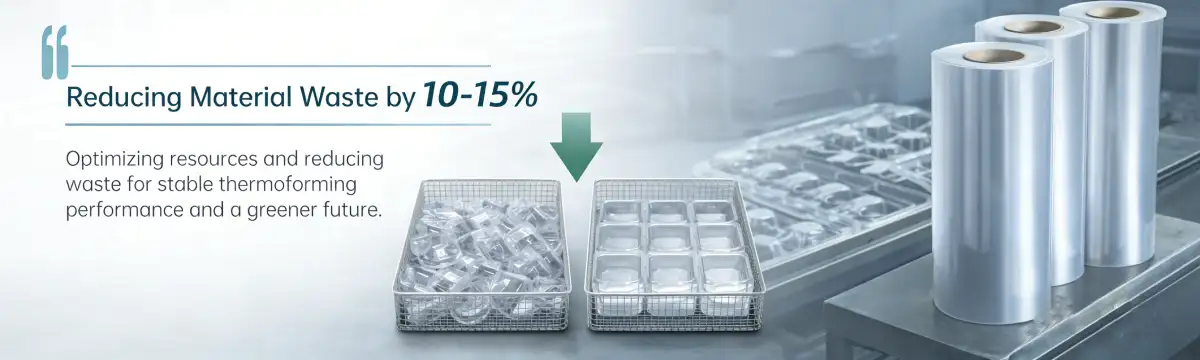
Thermoforming PET sheet has a wide range of applications in the toy packaging industry. PET (polyethylene terephthalate) is a thermoplastic with excellent properties and is widely used in packaging materials, especially in applications that require transparency and toughness. The following is a detailed introduction to the application of PET plastic sheets for thermoforming in toy packaging:
Characteristics of thermoforming PET sheet
● Excellent transparency:
Thermoforming PET sheet has high transparency and a glass-like appearance, making them ideal for displaying products. For toy packaging, high transparency can effectively display the appearance and details of the toy, attract consumers’ attention, and improve the display effect of the product.
● High strength and impact resistance:
Thermoforming PET sheet has high mechanical strength and good impact resistance. This feature ensures that the box can protect the toys inside from damage during transportation and handling, extending the service life of the product.


● Excellent thermoforming performance:
PET plastic exhibits good plasticity during the thermoforming process and can be easily heated, formed, and cooled into the desired shape. For toy boxes with complex shapes, PET sheets can achieve precise molding to meet design requirements.
● Chemical stability:
PET plastic has good resistance to most chemicals and is not easily dissolved or corroded. This allows PET boxes to maintain their performance and appearance under various environmental conditions and will not change due to contact with chemicals.
● Environmentally friendly:
PET plastic is a recyclable material that can reduce the impact on the environment by recycling and reusing. With the increasing awareness of environmental protection, the use of PET materials helps to meet environmental regulations and consumers’ environmental protection requirements.
Thermoforming process
Thermoforming is a process in which a plastic sheet is heated and softened, and then attached to the mold surface by vacuum or pressure, and then cooled to form the desired shape. PET sheets have good thermoforming properties and can be used to make toy boxes with various complex shapes.

For PET plastic sheets, the thermoforming process includes the following steps:
● Heating:
Put the PET sheet into the thermoforming machine and heat it to an appropriate temperature (usually between 180-220℃) through a heating plate or infrared heater to soften it.
● Molding:
The heated PET sheet is placed on the mold and pressed into the mold by vacuum adsorption or mechanical pressure to form the desired shape. For complex toy packaging box designs, multi-part molds can be used to achieve precise molding.
● Cooling:
The molded PET sheet needs to be cooled quickly to maintain the stability of its shape and size. Cooling can be achieved through air cooling or water cooling systems.
● Trimming and post-processing:
The cooled PET packaging box usually needs to trim excess material to achieve the final size and appearance requirements. According to specific needs, surface treatment such as printing, coating, etc. can also be performed.
Design and application of PET toy packaging boxes
The use of PET plastic sheets to make toy packaging boxes can not only achieve beautiful appearance design, but also increase the added value of the product. Specific applications include:


● Display box:
The high transparency of PET sheets makes the packaging box have a display effect, and consumers can directly see the appearance and details of the toy through the packaging box. This is very important for attracting consumers and increasing sales.
● Protective box:
The toy packaging box is not only for displaying products, but also for protecting the toys inside from physical impact and pollution from the outside world. The high strength and impact resistance of PET sheets ensure the safety of toys during transportation and storage.
● Diverse shapes:
Thermoforming technology allows PET packaging boxes to be made into various complex shapes and structures to meet the packaging needs of different toy products. For example, some toys require specific nesting structures to fix and display the various parts of the toy, and PET sheets can achieve these designs through precise thermoforming.
● Environmentally friendly packaging:
With the increase in environmental awareness, consumers and companies are pursuing more environmentally friendly packaging solutions. The recyclability of PET plastic makes it an ideal choice for environmentally friendly packaging materials. Companies can reduce their carbon footprint and environmental impact by using PET materials and enhance the brand’s social responsibility image.
Conclusion
Thermoforming PET sheet has become an important material in the field of toy packaging boxes due to their excellent transparency, high strength, good thermoforming performance and environmental protection characteristics. Through advanced thermoforming technology, PET sheets can achieve complex packaging designs to meet the dual needs of displaying and protecting toys. In the future, with the advancement of technology and the improvement of environmental protection requirements, the application of PET plastic sheets in toy packaging boxes will be more extensive and diversified.