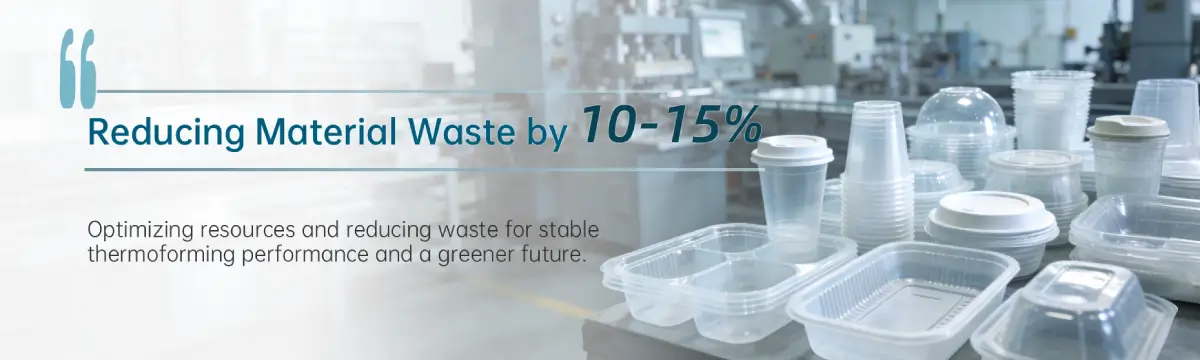
Food grade PET sheet rolls are widely used in thermoforming packaging, but long-term consistency remains a key challenge for food packaging processors.
This case study documents a 25-ton PET sheet roll shipment to the Netherlands, supplied at 0.6 × 650 mm, used for food-contact thermoforming packaging.
The customer has placed six repeat orders, using the same specification, primarily due to stable forming performance, controlled thickness tolerance, and reliable export delivery.
From a manufacturer’s perspective, this case illustrates how process compatibility and supply consistency, rather than price alone, drive long-term procurement decisions in food packaging.
Background: Why Long-Term PET Sheet Supply Matters in Food Packaging
Consistency Is More Critical Than Price in Food-Grade Packaging
Why it matters for buyers:
In food packaging, production interruptions are costly. A minor deviation in PET sheet thickness, surface condition, or heating response can lead to unstable forming, increased scrap rates, and frequent line adjustments.
From our experience, many procurement issues arise not from material failure, but from inconsistency between batches. A PET sheet that performs well during the first order but behaves differently in subsequent shipments introduces operational risk that outweighs short-term cost savings.
For food packaging buyers operating continuous thermoforming lines, process stability is often a higher priority than nominal material performance.
Overview of DESU as a PET Sheet Manufacturer
DESU is a PET sheet manufacturer with more than 10 years of experience supplying food-grade PET sheet rolls for thermoforming applications. Our focus is not on offering the widest material range, but on delivering stable, repeatable PET sheet performance for long-term packaging programs.
Our PET sheet rolls are exported to markets including the European Union, United States, and Middle East, where food-contact requirements and production expectations are well established.
Project Overview: PET Sheet Roll Supply to the Netherlands
Key Facts:
- Material: Food Grade PET Sheet Roll
- Thickness: 0.6 mm
- Width: 650 mm
- Shipment Volume: 25 tons
- Destination: Netherlands
- Application: Food-contact thermoforming packaging
- Repeat Orders: 6 times

Customer Profile and Application Scenario
The customer is a food packaging processor based in the Netherlands, operating high-speed thermoforming lines for food packaging applications. Their production relies on roll-fed PET sheet materials with stable forming characteristics to support continuous operation.
The material is used for food-contact packaging, where appearance consistency, forming accuracy, and hygiene control are essential.
Order History and Repeat Purchasing Pattern
The initial order was placed as a trial shipment, focusing on forming performance, thickness consistency, and delivery condition. After successful production runs, the customer continued with repeat orders using the same core specification.
The most recent shipment consisted of 25 tons of PET sheet rolls, marking the sixth repeat order. Importantly, the specifications remained unchanged, reflecting confidence in long-term material compatibility.
Specification Selection: Why 0.6 × 650 mm PET Sheet Roll
Thickness Selection from a Forming Perspective
A thickness of 0.6 mm is commonly selected in food thermoforming as a balance between structural rigidity and material efficiency. At this thickness, the sheet provides sufficient stiffness for forming stable cavities while remaining cost-efficient for high-volume production.
More importantly, thickness tolerance control at 0.6 mm plays a significant role in forming stability. Variations beyond acceptable limits can lead to uneven heating, inconsistent wall distribution, and trimming challenges.
Roll Width and Machine Compatibility
The selected roll width of 650 mm aligns with the customer’s existing thermoforming equipment. Matching roll width to machine configuration reduces edge trimming waste and improves feeding stability.
From a manufacturing standpoint, maintaining roll edge alignment and consistent winding tension is essential to prevent telescoping or feeding deviation during high-speed operation.
Sheet Roll vs Sheet Cut Format in Food Packaging
For continuous production lines, sheet roll supply offers clear advantages over cut sheets. Roll-fed processing reduces handling steps, minimizes surface contamination risk, and improves operational efficiency.
In this case, roll format also simplified logistics and warehouse handling at the customer’s facility.
Food Grade PET: Practical Manufacturing Control, Not Just Certification
Raw Material Selection and Batch Control
Food-grade PET sheet performance begins with controlled raw material sourcing. Resin batches are selected based on food-contact suitability and consistency, with batch traceability maintained throughout production.
This approach ensures that each production run starts with predictable material behavior, reducing variability downstream.
Dedicated Production and Contamination Control
For food packaging materials, production discipline matters as much as formulation. Dedicated extrusion lines, controlled material flow, and standardized cleaning procedures help reduce contamination risks.
Rather than relying solely on documentation, food packaging customers evaluate suppliers based on real production outcomes, including odor neutrality and surface cleanliness.
Real-World Food Packaging Requirements
In daily production, customers focus on practical issues such as odor, surface residue, and forming cleanliness. PET sheet rolls must perform consistently under repeated heating cycles without introducing unwanted surface defects or migration concerns.
These requirements influence how materials are formulated, processed, and packaged prior to shipment.
Thermoforming Performance: What Matters in Daily Production
Heating Window Stability in Continuous Forming
Stable heating behavior is critical in thermoforming. PET sheets must soften uniformly across the sheet width and length to support consistent cycle times.
Material variations that require frequent temperature adjustments increase downtime and reduce overall efficiency. In this project, maintaining a predictable heating window was a key factor in repeat purchasing.
Forming Behavior and Visual Consistency
For food packaging, visual appearance is not a cosmetic preference but a functional requirement. Consistent transparency, uniform wall thickness, and clean cavity definition contribute to both product protection and consumer perception.
Stable forming behavior reduces rework and quality inspection pressure at the packaging stage.
Tooling Compatibility and Process Reliability
PET sheet interaction with forming molds affects tool wear and maintenance frequency. Stable materials reduce mold fouling and improve long-term process reliability.
In this case, the customer reported minimal forming-related adjustments across multiple production cycles.
Quality Control from Extrusion to Final Shipment


Thickness Control and Inline Monitoring
Thickness consistency is monitored throughout extrusion to ensure compliance with customer specifications. Inline measurement systems help detect deviations early, allowing corrective actions before full rolls are completed.
Consistent thickness directly translates to predictable forming behavior.
Surface Condition and Roll Winding Quality
Beyond thickness, roll quality plays a significant role in processing efficiency. Flatness, edge alignment, and winding tension must be controlled to prevent feeding issues.
Poor winding can negate otherwise acceptable material properties.
Batch Verification Before Shipment
Before shipment, each batch undergoes verification against agreed parameters. This includes visual inspection, dimensional checks, and documentation review to ensure alignment with customer requirements.
This step helps prevent discrepancies between production and delivery.
Export Packaging and Logistics for PET Sheet Rolls
Packaging Design for Long-Distance Ocean Transport
PET sheet rolls are packaged to protect against deformation, moisture exposure, and impact during ocean transport. Proper fixation and palletization reduce the risk of damage during handling.
Packaging design considers both transportation safety and ease of unloading at the destination.
Shipping Volume and Load Planning
A shipment volume of 25 tons represents an efficient container utilization level while maintaining manageable handling weight per roll.
Load planning balances transportation efficiency with material protection.
Delivery Reliability and Receiving Feedback
Upon arrival in the Netherlands, the material condition matched shipment expectations. Stable packaging and controlled loading helped ensure the rolls were immediately usable upon receipt.
Positive receiving feedback contributes to long-term supply confidence.
Why the Customer Continues to Reorder
Reduced Production Risk and Line Stability
Repeat orders are often driven by reduced operational risk. Stable PET sheet supply minimizes production disruptions and simplifies daily process control.
Consistency allows operators to focus on output rather than troubleshooting material issues.
Lower Total Cost of Ownership
Although material price remains a factor, customers increasingly evaluate total cost of ownership, including scrap rate, downtime, and labor efficiency.
Stable materials often deliver lower overall costs despite marginal price differences.
Supplier Communication and Specification Stability
Clear technical communication and consistent specifications reduce misunderstandings. In long-term supply relationships, predictability becomes a competitive advantage.
PET Sheet Roll Selection Guidance for Food Packaging Buyers
Key Questions to Ask Before Placing an Order
Buyers should evaluate thickness tolerance, roll quality, food-contact production controls, and forming performance consistency.
These factors often have greater impact than nominal specifications alone.
Common Mistakes in PET Sheet Procurement
Common issues include overemphasis on price, insufficient trial validation, and lack of attention to roll quality.
Addressing these factors early helps prevent downstream complications.
When PET Is the Right Material—and When It Is Not
PET is well suited for many food packaging applications, but not all. Buyers should evaluate application requirements and consider alternatives when appropriate.
Material selection should align with both product and process needs.
Conclusion: What This Case Demonstrates for PET Sheet Buyers
Stable Supply Is a Manufacturing Asset, Not a Commodity
This case demonstrates that PET sheet rolls are not interchangeable commodities in food packaging. Long-term stability delivers measurable operational benefits.
Why Repeat Orders Reflect Process Compatibility
Six repeat orders at fixed specifications indicate alignment between material performance, forming process, and logistics execution.
Such alignment reduces risk across the supply chain.
How DESU Supports Long-Term Food Packaging Programs
DESU focuses on supporting food packaging customers through consistent material performance, controlled production, and reliable export delivery, helping reduce procurement risk over time.
Why did the customer continue ordering the same PET sheet specification?
The customer prioritized forming stability and predictable daily output. Maintaining the same 0.6 × 650 mm specification reduced process adjustments and minimized production risk across multiple cycles.
What does repeat ordering indicate in PET sheet supply?
Repeat orders typically indicate compatibility between material performance, forming equipment, and logistics execution, rather than short-term price advantages.