特色应用 · 食品托盘板
如何选择食品托盘生产用热成型片材
实用的片材选择指南,供热成型制造商和包装加工商选择 APET、RPET、PP 或 PS/HIPS 片材卷进行食品托盘生产。
快速解答
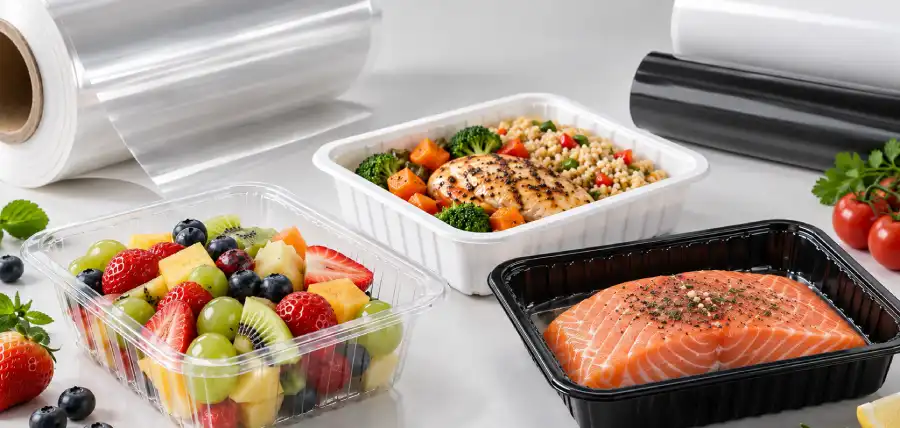
为了 透明的新鲜和冷藏食品托盘, APET 或 RPET 通常是第一个要评估的热成型片材路线。 对于涉及的应用 更高的填充或使用温度, PP 通常是更相关的起点。 PS/HIPS可适合选定 不透明、刚性、冷藏或冷冻食品托盘。
材料只是起点。最终的板材选择也应该 考虑 起始厚度、成型深度、刚性、辊宽、 外观、防雾、密封和阻隔要求。
01 根据应用要求选择板材
有用的食品托盘表查询不应以 “哪种塑料最好?”应该开始选材 从板材在成型后将面临的条件来看 热成型。
| 买家要求 | 首先评估的材料 | 板材采购注意事项 |
|---|---|---|
| 透明的新鲜、农产品或冷藏食品托盘 | APET | 透明度、刚度、规格、成型深度、 防雾和密封要求。 |
| 回收含量要求 | rpet | 回收内容规范, 外观和热成型性能。 |
| 更高的填充或使用温度 | PP | 实际温度条件, 刚度、规格和成型窗口。 |
| 不透明或彩色硬质食品托盘 | 聚苯乙烯/高抗冲聚苯乙烯 | 颜色、冲击要求、刚度、 温度和最终托盘几何形状。 |
| 需要额外屏障的密封托盘 | PET基多层/阻隔结构 | 盖膜、密封系统、 氧气/水分要求和保质期目标。 |
02 指定成形零件的起始板材规格
板材厚度是买家首先考虑的数字之一 在询价中,但不应选择标称起始仪表 独立于热成型几何形状。
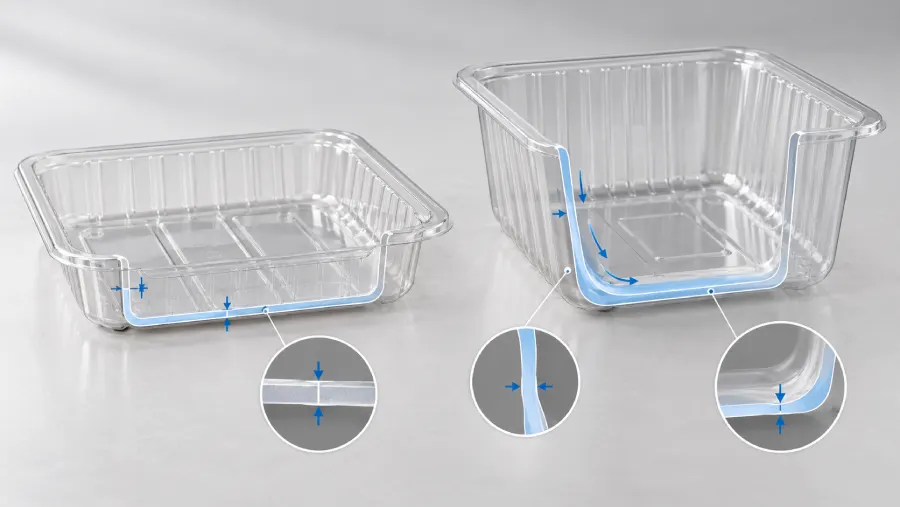
在成型过程中,板材拉伸并重新分布成 空腔。更深的拉深或更苛刻的几何形状可以 在侧壁、拐角和侧面产生更大的变薄 托盘底部。
这是一个有用的 应用参考范围, 不是 DESU 的制造厚度限制。 应确认最终起始仪表 根据材料、托盘深度、几何形状, 所需的刚性和热成型条件。
较深的蛀牙通常需要更多的关注 材料分布和最小最终壁厚。
紧角和局部几何形状可以创建 成形时集中减薄。
托盘在使用后必须保持足够稳定 成型、填充、堆垛和搬运。
对于现有的生产线,目前成功的 材料和规格通常是最好的起始基准。 如果当前托盘壁薄弱、泛白或不稳定 成形、增加厚度并不是唯一的答案。
加热曲线、材料分布、模具几何形状 之前还应考虑机器条件 更改板材规格。
03 采购订单需要的不仅仅是材料和厚度
“APET 0.5 mm”不是完整的生产卷 规格。一旦材料和近似规格确定 建立后,物理卷规格也必须匹配 热成型线。
生产前需确认的参数
为什么卷材宽度应遵循模具布局
卷宽度影响材料利用率以及机器 兼容性。对于现有线路,发送当前卷 宽度。对于新模具,提供模具布局、数量 腔体和机器进料宽度(如有)。
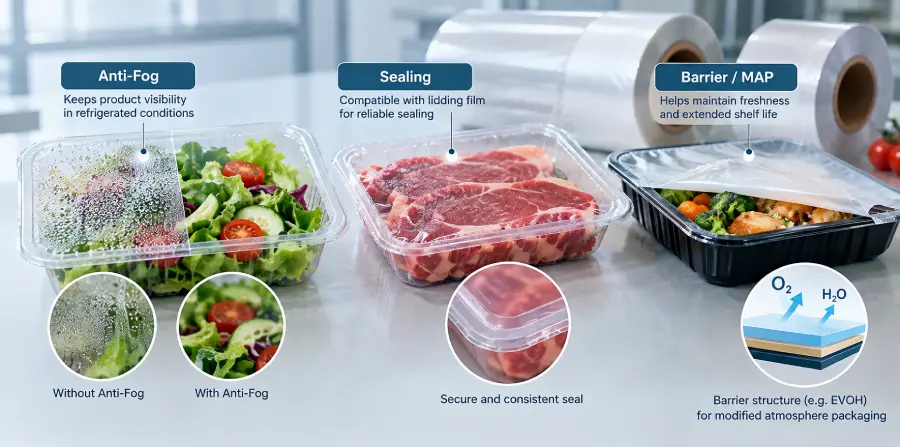
04 仅当包需要时才添加功能需求
食品级热成型片材不需要自动 每种可用的表面处理或多层结构。 功能需求应从实际出发定义 包装系统。
防雾片
当凝结减少时考虑防雾 冷藏产品、新鲜食品或其他食品中的可见度 冷藏包装。
密封兼容性
当成型的托盘用盖膜密封时, 片材结构、薄膜及密封条件 应该一起评价。
屏障结构
肉、鱼、奶酪、MAP 和更长的保质期 应用可能需要额外的氧气或 防潮性能。
当标准单片材不够用时, DESU 可以讨论合适的多层或阻隔片材 根据客户密封系统的结构 和所需的封装性能。
05 在实际热成型生产线上批准板材
进纸测量很重要,但最终批准 还应包括工作表在预期上的行为方式 机器和模具。
这在更换材料时尤其重要, 减少规格,转向回收成分板材, 引入功能性涂层或运行新模具。
材料、规格、宽度和所需功能。
在指定的机器和工具上加工板材。
检查空腔定义、拐角、墙壁和修剪行为。
在定期供应卷材之前确认成型件的性能。
成型后应检查哪些内容?
- 壁厚和角部厚度分布
- 型腔定义和成型一致性
- 成型后托盘刚度
- 泛白、浑浊或可见的表面缺陷
- 凸缘和轮辋稳定性
- 修剪行为
- 相关的堆叠和解除嵌套
- 密封或防雾性能(如指定)
试验的目的不是重新设计托盘。 是为了确认购买的板材规格 与客户现有的可靠工作 模具、机器和生产条件。
06 为食品托盘表询价发送 DESU 的内容
有用的询价不需要太复杂。 如果您已经运行食品托盘,请从现有的开始 板材规格。对于新项目,请发送尽可能多的 您所掌握的以下信息。
板材厚度: ___ 毫米/未决定
卷筒宽度: ___ 毫米
颜色/外观: 透明/自然色/白色/彩色
托盘尺寸: 长 ___ × 宽 ___ × 深 ___ 毫米
食品/应用: ___
储存条件: 常温/冷藏/冷冻
灌装/使用温度: ___
防牙: 是/否/未决定
密封: 是/否/未决定
障碍/地图: 是/否/未决定
机器送料宽度: ___ 毫米/未知
芯/卷外径/卷重量要求: ___ / 遵循供应商推荐
图纸或成型样品: 可用/不可用
试用数量: ___
预计生产需求: ___
如果某些值尚不清楚,请将其保持打开状态。 托盘图纸、当前纸张标签、现有样品 或者机器信息通常可以提供足够的上下文 缩小起始规格。
07 常见问题解答 — 购买食品托盘热成型片材
购买食品托盘卷时我应该提供哪些信息?
从材料、厚度、卷宽开始, 托盘尺寸和应用。还提供储物空间 或使用温度和任何防雾、密封或屏障 要求。对于现有的生产线, 当前的板材规格特别有用。
我应该为食品托盘热成型订购什么厚度的板材?
许多食品托盘应用的实用参考范围 是 0.30–1.50 毫米,但这不是一个 制造限制或普遍建议。 应根据材料选择起始规, 成型深度、几何形状、所需的刚性和最终 墙分布。
DESU 可以从我现有的托盘中推荐一个起始量规吗?
是的。最有用的参考资料是当前材料 和规格、托盘尺寸和深度、成型样品、 模具信息和您遇到的任何性能问题 试图解决。
我应该购买 APET 还是 RPET 来制作透明食品托盘?
两者都可以评估透明热成型食品 包装。选择取决于回收内容 要求、外观目标、成型性能 以及最终包装所需的规格。
每个冷藏托盘都需要防雾 PET 片材吗?
否。结露时应注明防雾 影响产品可见性或包装展示。 如果发生冷凝,标准板材可能就足够了 不是一个实际问题。
我可以发送当前的板材规格以获得同等的供应吗?
是的。对于现有的热成型生产线,发送 当前材料、规格、宽度、卷配置和 申请通常是最快的起点。 片状样品或成型托盘可以提供额外的 需要的地方可以参考。
DESU 供应成品食品托盘吗?
不会。DESU 供应热成型塑料片材和 片材卷到热成型工厂和包装 制造成品托盘的加工商。
采购用于食品托盘生产的片材卷?
将您当前的材料、厚度、卷宽发送给我们 和应用。对于新项目,包括托盘 尺寸、成型深度和功能要求。 我们可以利用这些信息来讨论实际问题 您的热成型生产线的起始板材规格。