How to Choose Thermoforming Sheet for Food Trays: PET, PP or PS/HIPS
A practical guide from a thermoforming sheet manufacturer on material selection, temperature, forming depth, sheet thickness, roll width and functional requirements for food tray production.
01 PET, PP or PS/HIPS: Start With the End-Use Conditions
バイヤーから食品トレイに適したプラスチックシートはどれですかと尋ねられたとき、 材料名だけで信頼できる仕様を推奨できることはほとんどありません。
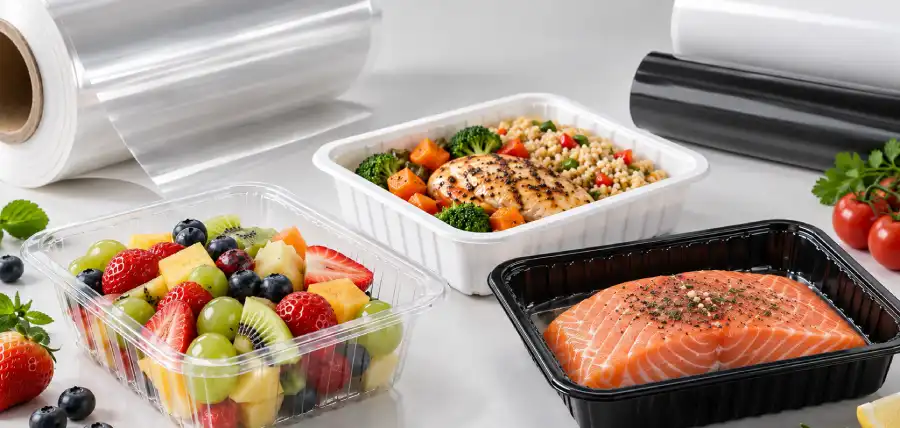
PET、PP、PS/HIPS はすべて熱成形食品包装に使用できます。 ただし、透明度、温度、 剛性、衝撃性能、加工要件。
より良い出発点は、どのような食品を詰めるかということです。 トレイを室温で使用するか、冷蔵で使用するか、 冷凍か加熱か、トレイの深さ、密閉かどうか、 防曇またはバリア性能が必要です。
| 材料 | 検討すべき一般的な理由 | 確認事項 |
|---|---|---|
| 類人猿 / RPET | 高い透明度、優れた剛性、製品の視認性 多くの常温食品および冷蔵食品トレイに使用できます。 | トレイの深さ、透明度、リサイクル内容、 シール構造と防曇要件。 |
| pp | 温度パフォーマンス、 低密度または特定の熱い食品用途が重要です。 | 使用温度、剛性、成形深さ、 シールシステムと充填条件。 |
| PS / ヒップ | 不透明または色付きのトレイを考慮することがよくありますが、 乳製品用途および一部の冷蔵または冷凍食品の包装。 | 低温性能、衝撃要件、 色、剛性、最終的なトレイの形状。 |
02 温度が材料の決定を変える可能性がある
保管温度と使用温度は両方の材料選択に影響を与える可能性があります そしてグレード選び。アンビエントトレイに適した素材 自動的に冷蔵に適しているとみなすべきではありません。 冷凍または加熱された包装。
低温衝撃性能がより重要になります。
冷却後も剛性と成形安定性が適切に保たれていなければなりません。
多くの場合、標準グレードが適切な出発点となります。
耐熱性と適切な材料グレードが重要になります。
冷蔵食品の場合、成形トレイには適切な剛性が必要です 冷却後の衝撃性能。凍結されたアプリケーションにより、 特に積層時の低温靱性に対する圧力、 輸送と取り扱い。
PPとPS/HIPSは、さまざまな温度条件に対応するグレードを用意しています。 一方、PET ベースの構造は多くの冷蔵食品や生鮮食品に広く使用されています。 透明性と剛性が重要な用途。
03 公称シート厚さよりもトレイの深さが重要です
よく見られる仕様上の間違いの 1 つは、数字で始まることです。 完成トレイの形状を検討する前に、「0.5 mm PET」などを使用してください。
During thermoforming, the sheet stretches and redistributes. A deeper cavity generally requires more material redistribution than a shallow tray. The bottom, sidewalls and corners can therefore finish with very different wall thicknesses even when the starting sheet gauge is the same.
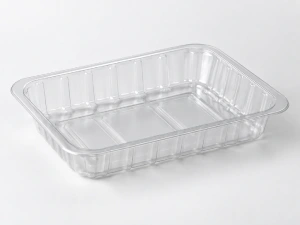 Shallow Tray
Less material redistribution.
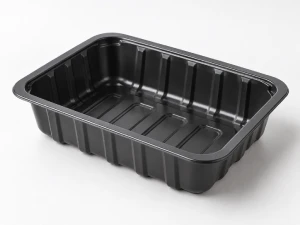 Medium Depth
Moderate material stretching.
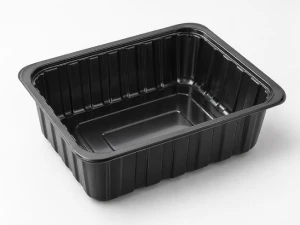 Deep Tray
Greater redistribution during forming.
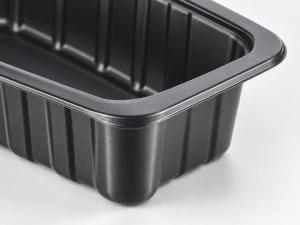 Corners
Often a critical area for wall thickness.
- tray length and width;
- 形成深さ。
- corner radius;
- minimum acceptable wall thickness;
- sheet material;
- mold layout;
- forming process and machine conditions.
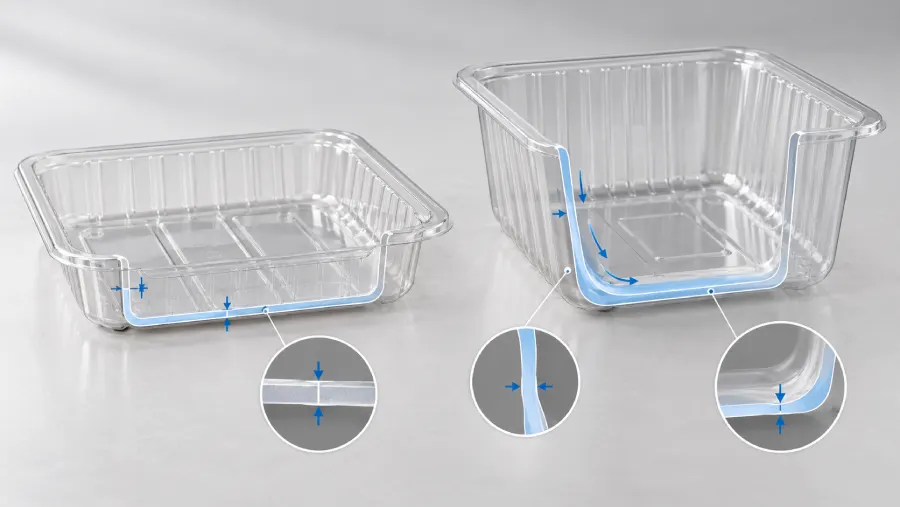
最初のシートの厚さを増やすことが、最初の修正として常に最善であるとは限りません。 加熱、材料の分配、成形条件もチェックする必要がある場合があります。 シート仕様変更前。
04 ロール幅は金型と機械から定義する必要があります
通常、シートの RFQ では厚さが最も注目されますが、 しかし、実際の生産ではロール幅も同様に重要です。
通常、推奨されるシート幅は次のように決定されます。 金型レイアウト、キャビティ数、製品配置、 切りしろとミシン送り幅。
If an existing tray is already running successfully, the current roll specification is normally the easiest starting reference. For a new project, a mold layout or tray drawing gives a sheet manufacturer much more useful information than simply asking for a standard roll width.
05 Do You Need Anti-Fog, Sealing or a Barrier Structure?
Anti-Fog
Anti-fog treatment is mainly useful when condensation affects product visibility or package appearance, especially in refrigerated fresh-food applications.
It does not need to be added to every food tray specification. If condensation is not a real packaging problem, adding anti-fog only makes the specification more complicated.
ヒートシール
If the tray will be sealed with a lidding film, the sealing system should be discussed before the sheet structure is finalized.
Sheet material, sealing layer, lidding film and sealing conditions need to work together. Some applications may therefore need a laminated structure instead of a standard mono sheet.
Barrier Packaging
Fresh meat, fish, cheese and modified-atmosphere packaging can require higher oxygen or moisture barrier performance.
In these projects, the question is no longer simply PET versus PP. Shelf-life requirements, gas environment and sealing structure can determine whether a multilayer solution such as PET/EVOH/PE barrier sheet should be evaluated.
For chilled produce, meat or ready-to-eat food, you can also read our guide on 生鮮食品・中食包装用PETシートの選定 。
06 シート製造業者にどのような情報を送信する必要がありますか?
有用な RFQ は複雑である必要はありません。 ただし、シートメーカーに十分な情報を提供する必要があります 実際に何が熱成形されるのかを理解するために。
- 包装される食品の種類。
- 常温、冷蔵、冷凍、加熱された使用。
- トレイの長さ、幅、深さ。
- すでに生産されている場合は、現在の材料と厚さ。
- 必要な透明度または色。
- ロール幅または機械送り幅。
- 金型レイアウト(利用可能な場合)。
- 密閉要件。
- 防曇要件。
- バリア要件。
- 仕向け先の市場と食品との接触に関する必要な文書。
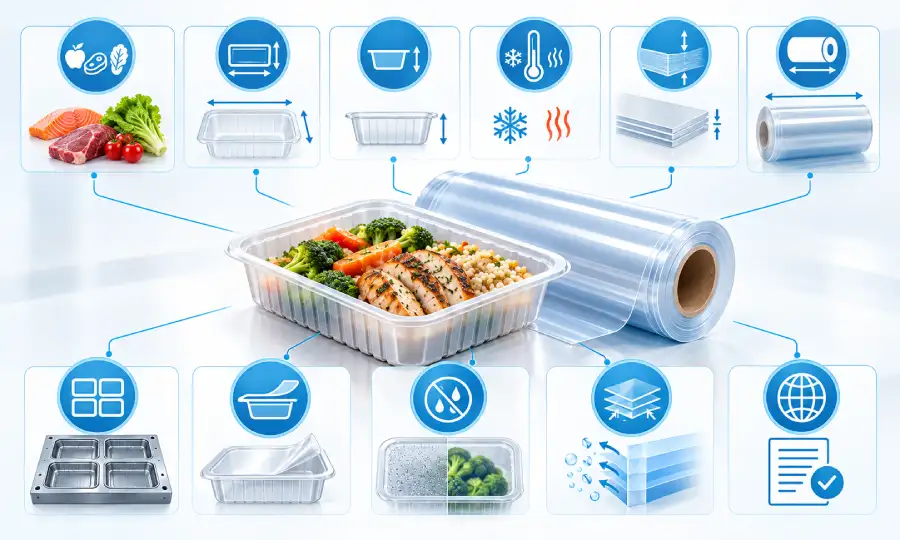
For an existing production line, the current sheet specification or a sheet sample is usually a useful reference.
For a new project, a tray drawing, formed sample or mold information can tell us much more than a generic request for “food-grade plastic sheet.”
07 Different Food Trays Need Different Sheet Specifications
Fruit trays, bakery trays, fresh-meat trays, frozen-food trays and ready-meal containers may all be classified as food packaging, but that does not mean they should use the same thermoforming sheet.
透明なフルーツトレイは、透明性と硬さを優先する場合があります。 冷凍食品トレイでは、低温での動作をより重視する場合があります。 インスタントミール容器には、より高い耐熱性が必要な場合があります。 一方、生肉トレイには追加のシールとバリア要件が必要になる場合があります。
このアプローチにより、以前よりもはるかに有用なシート仕様が得られます。 製品名のみでPET、PP、PS/HIPSを選択してください。
他のパッケージング アプリケーションについては、次の手順に進みます。 DESU アプリケーション ハブ 。
08 よくある質問
熱成形食品トレイに最適なプラスチックシートはどれですか?
There is no single best material for every tray. PET is commonly considered where clarity and stiffness matter, PP where temperature-related performance is important, and PS/HIPS for certain opaque, refrigerated, frozen or application-specific trays.
How do I choose the sheet thickness for a food tray?
Start from the material, tray dimensions, forming depth, geometry and required final wall thickness. The nominal starting gauge alone does not determine the wall thickness of the finished thermoformed tray.
Can the same sheet specification be used for chilled and frozen food?
Not automatically. Low-temperature use can change impact, rigidity and handling requirements, so the actual storage and transport conditions should be confirmed first.
Does every refrigerated food tray need anti-fog sheet?
No. Anti-fog is mainly useful when condensation affects package visibility or appearance. It should be selected according to the real packaging condition.
What should I provide when requesting custom food tray sheet?
Useful information includes tray dimensions, forming depth, food type, use temperature, material preference, current sheet thickness if available, roll width, sealing requirements and any anti-fog or barrier requirements.
Need a Sheet Specification for Your Food Tray?
Send us your tray dimensions, forming depth, application temperature and current sheet specification. DESU can help evaluate the material, thickness, width and functional requirements for your thermoforming sheet.
Discuss Your Project