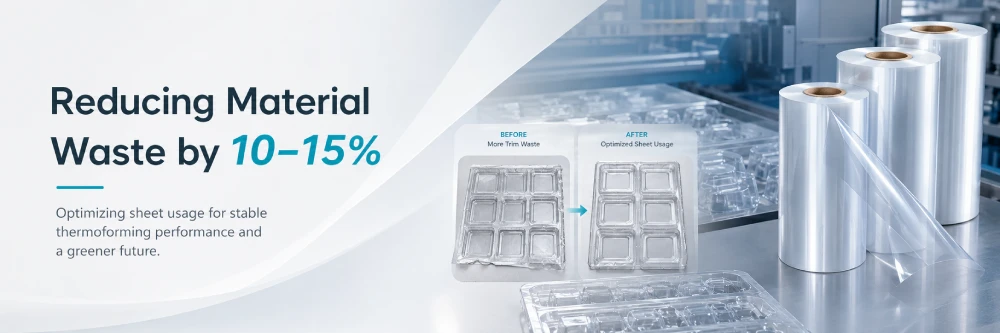
热成型是将热塑性板加热到其软化点的过程,将其扩展到单面模具上并将其固定在适当的位置,同时冷却并凝固到所需的形状中。将热塑性板夹在固定装置中,并通过对流或辐射热通过烤箱加热,直到变软。然后将纸水平固定在模具上,并使用真空压力,气压或机械力按下或伸展到模具上。柔软的板符合模具的形状,并保持在适当的位置,直到冷却为止。然后修剪多余的材料,可以将多余的材料与未使用的塑料混合,然后重新制成成品。
Thermoforming is usually used for food packaging, but there are also many applications in other fields, such as electronic product trays, toy packaging, medical masks, etc. Rigid sheets of thin size (less than 0.060 inches) are mainly used for disposable packaging, while sheets of thickness (greater than 0.120 inches) are usually used for outer packaging of automobiles, machinery, electronic equipment and cosmetics.在此过程中可以使用各种热塑性材料。
DESU热成型材料包括:
热成型技术
真空形成:也称为水泡形成。在模具腔和热塑性板之间形成真空。真空压力迫使纸板符合模具并形成零件形状。

压力形成:除了在纸板下使用真空外,还将气压(通常为50 psi,但最高100 psi)应用于纸板的背面,以帮助将其压在模具上。这种额外的力可以使较厚的床单形成并产生更细节的细节。

机械形成:通过直接接触机械地将热塑性板强加于模具。