คู่มือการเลือกแผ่นเทอร์โมฟอร์ม
แผ่น PET หรือ PP สำหรับถ้วยและฝาปิดที่ขึ้นรูปด้วยความร้อน
เลือกแผ่นเทอร์โมฟอร์ม PET หรือ PP สำหรับถ้วยและฝาปิดโดยการวาด พอดีขอบ เกจ ความกว้างของม้วน ความชัดเจน อุณหภูมิ การปิดผนึก และการทดสอบเส้น
01Separate the cup specification from the lid
A buyer may send us a drawing set labeled “cup and lid” and ask for one PET or PP sheet recommendation. From a thermoforming sheet manufacturer’s perspective, that request contains two different forming jobs. The cup creates its performance through side walls, bottom geometry and stacking. The lid depends more heavily on rim definition, fit, denesting and the chosen closure or seal. One resin family may be considered for both, but that does not mean one gauge, surface or process window will serve both parts.
ก่อนที่จะหารือเกี่ยวกับเนื้อหา ให้ระบุว่าส่วนประกอบใดที่มาจากแหล่งที่มา จะก่อตัวอย่างไร และความล้มเหลวใดที่จะปฏิเสธส่วนประกอบนั้น ถ้วยอาจดูใสแต่ยังคงล้มเหลวเนื่องจากผนังบางเกินไปหรือกองกระดาษติด ฝาปิดอาจเกิดขึ้นได้อย่างสมบูรณ์แต่ยังคงล้มเหลวเนื่องจากขอบไม่พอดีอย่างสม่ำเสมอหลังจากการตัดแต่งและการจัดการ
คัพ: พฤติกรรมความลึกและสแต็ค
กำหนดความลึกในการดึง รัศมีด้านล่างและมุม การกระจายของผนังด้านข้าง ความแข็งของขอบล้อ ระยะห่างของการซ้อน เงื่อนไขการปล่อยและการเติม ระบุว่าถ้วยต้องแสดงสินค้าให้ชัดเจนหรือไม่ และจะจัดการอย่างไรหลังเติม
ฝาปิด: ความแม่นยำของขอบและการปิด
กำหนดโปรไฟล์ขอบล้อ ฟังก์ชั่นการล็อคหรือซีล พิกัดความเผื่อของขนาด การดีเนสต์ รายละเอียดบานพับหรือแถบ ความโปร่งใส ส่วนต่อประสานของฝา และเงื่อนไขที่จะตรวจสอบความพอดี
การแยกนี้ควรยังคงมองเห็นได้ใน RFQ หากทั้งสองส่วนอยู่ในขอบเขต ให้จัดเตรียมภาพวาดแยกกันและรายการการยอมรับแยกต่างหากสำหรับแต่ละรายการ ซึ่งจะช่วยป้องกันไม่ให้ผลลัพธ์ที่ชัดเจนบนถ้วยซ่อนปัญหาฝาที่ยังไม่ได้รับการแก้ไข
02เลือก PET หรือ PP จากแอปพลิเคชัน
การตัดสินใจเลือกวัสดุควรเป็นไปตามชิ้นส่วนที่เสร็จแล้ว สภาพการขึ้นรูป การสัมผัสอุณหภูมิ ความต้องการด้านความชัดเจนและความแข็ง และงานขั้นปลายน้ำ ชื่อวัสดุเพียงอย่างเดียวไม่ได้บอกผู้ผลิตแผ่นงานว่าเกรด โครงสร้าง หรือพื้นผิวใดที่จะใช้ในสายการผลิตของลูกค้า
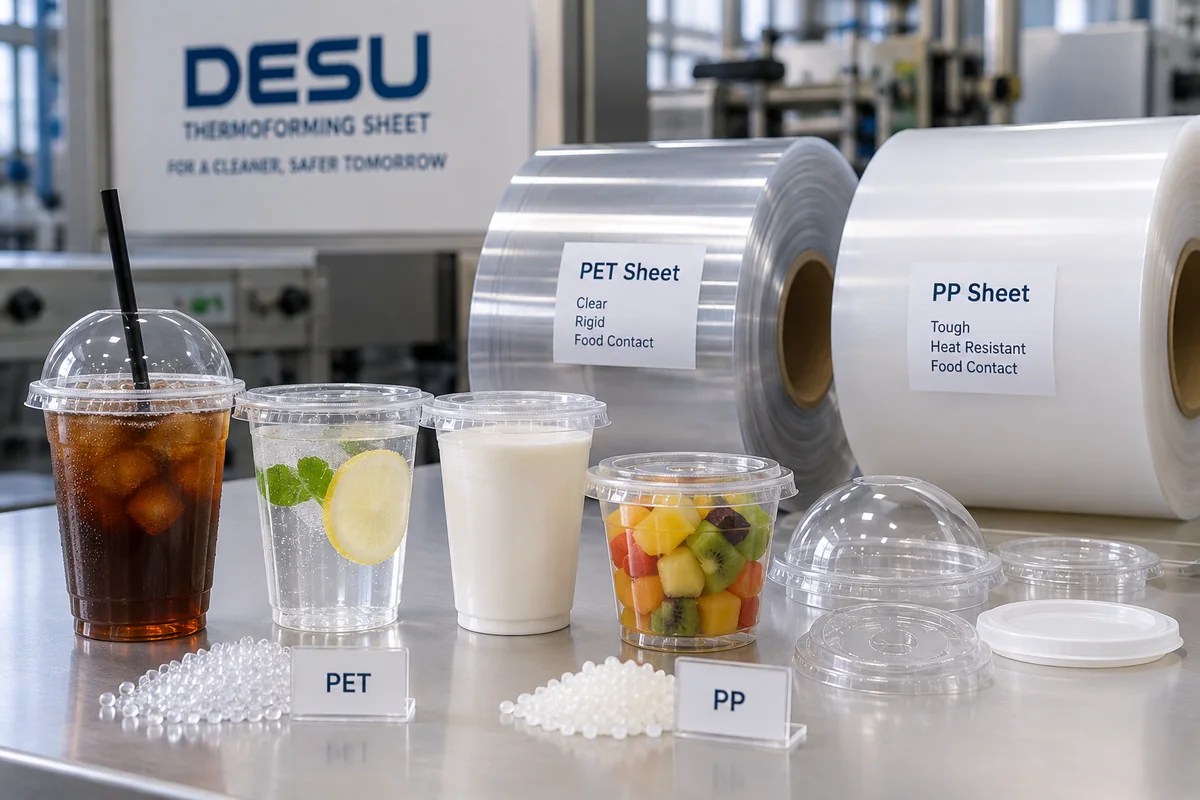
แผ่นเทอร์โมฟอร์ม PET is a practical starting route when high visual clarity and a crisp, rigid presentation rank near the top of the buyer’s list. The project still needs to confirm sheet condition, gauge, heating uniformity, draw, rim definition and compatibility with any printing, bonding or sealing step.
แผ่นพีพีเทอร์โมฟอร์ม deserves priority when toughness and the actual filling, storage or use-temperature conditions point in that direction. PP selection should still be tied to required stiffness, dimensional control, shrink behavior, forming window and closure performance. “Heat resistant” is not a complete grade specification, and it should not replace trials under the intended temperature cycle.
| Decision input | When PET is a strong starting point | When PP is a strong starting point |
|---|---|---|
| รูปร่าง | ผู้ซื้อให้ความสำคัญกับการแสดงผลที่ชัดเจนและการนำเสนอด้วยภาพที่ชัดเจน | ความชัดเจนเป็นเรื่องรองจากเกรด PP ที่เหมาะสมกับข้อกำหนดด้านการใช้งาน |
| อุณหภูมิ | รอบการใช้งานที่ผ่านการตรวจสอบแล้วเหมาะกับแผ่น PET ที่เลือกและชิ้นส่วนที่ขึ้นรูป | วงจรการบรรจุหรือการใช้งานรองรับการประเมินเส้นทาง PP |
| การขึ้นรูป | เครื่องมือ การดึง และการทำความร้อนสามารถสร้างผนังและขอบที่ต้องการได้ | สายการผลิตสามารถควบคุมการให้ความร้อน PP การดึง การหดตัว และพฤติกรรมด้านมิติได้ |
| การอนุมัติ | ถ้วยหรือฝาปิดที่ขึ้นรูปจะผ่านการทดสอบการวาด การพอดี การวางซ้อน การปิดผนึก และการจัดการแบบเดียวกับที่ใช้สำหรับการอนุมัติการผลิต | |
ชี้แจงลักษณะที่ปรากฏ อุณหภูมิ ความแข็ง ความเหนียว ความพอดี และลำดับความสำคัญของการซีล
เลือก PET หรือ PP และกำหนดสมมติฐานของแผ่นงานและม้วนที่แน่นอน
Compare measured results by cavity under recorded line settings.
03Build the cup specification around the draw
Cup depth makes wall distribution central to the sheet decision. Send the opening diameter, total depth, bottom profile, side-wall draft, corner radii, rim and any ribs or decoration that influence draw. Also identify where the finished cup needs a minimum wall or stiffness. Starting gauge should be chosen to protect these critical areas after forming, not simply copied from another cup with a similar capacity.
ข้อกำหนดในการซ้อนสมควรได้รับเกณฑ์การยอมรับของตนเอง ระบุระยะห่างของปึกที่ต้องการ วิธีปล่อยถ้วย และสายการผลิตเคยถูกกีดขวาง ปึกเอียง หรือการป้อนอาหารไม่สม่ำเสมอหรือไม่ หากเทอร์โมฟอร์มเมอร์ใช้หลายช่อง ให้ตรวจสอบการเรียงซ้อนและการกระจายตัวของผนังตามช่อง ค่าเฉลี่ยสามารถซ่อนตำแหน่งเดียวที่ก่อตัวบางๆ ซ้ำๆ หรือทำให้เกิดขอบที่บิดเบี้ยว
เงื่อนไขการเติมและการเก็บรักษาส่งผลต่อการอภิปรายเกี่ยวกับวัสดุ แจ้งอุณหภูมิผลิตภัณฑ์จริงแก่ผู้จำหน่ายแผ่นขณะบรรจุ สภาพการเก็บรักษาในภายหลัง และการสัมผัสระหว่างการขนส่ง อย่าใช้ป้ายกำกับกว้างๆ เช่น "ถ้วยเย็น" หรือ "ถ้วยร้อน" แทนสำหรับรอบนั้น ซัพพลายเออร์สามารถใช้เงื่อนไขเพื่อเป็นแนวทางในการทดลองได้ แต่ผู้ซื้อยังคงรับผิดชอบในการอนุมัติบรรจุภัณฑ์ที่เสร็จสมบูรณ์ภายใต้การใช้งานตามวัตถุประสงค์
- ผนังยังคงเป็นที่ยอมรับในบริเวณที่ลึกที่สุดและแหลมคมที่สุดหรือไม่?
- ขอบล้อมีความสม่ำเสมอเพียงพอสำหรับฝาท้ายน้ำหรือซีลหรือไม่?
- ถ้วยที่ขึ้นรูปจะซ้อนกัน ปล่อย และป้อนด้วยความเร็วที่ต้องการหรือไม่
- ลักษณะที่ปรากฏยังคงเป็นที่ยอมรับหลังจากการขึ้นรูปและการจัดการหรือไม่?
04Build the lid specification around rim and fit
A lid usually has less draw than a cup, but small dimensional changes at the rim can have a large effect on fit. Provide the mating cup or its controlled rim dimensions, the closure type and the force or handling behavior the buyer expects. State whether the lid snaps on, seals to the rim, combines both functions or is only a thermoformed insert.
Denesting must be assessed after forming, trimming, stacking and storage. A lid that separates by hand at the sample table may behave differently in an automatic line. Identify the feeder, line speed and failure mode. If sticking or double-picking occurs, review geometry, trim, surface, static behavior, sheet condition and machine settings together.
ควรระบุความโปร่งใสและสีเป็นข้อกำหนดในการยอมรับมากกว่าการกำหนดลักษณะทั่วไป โดยทั่วไป PET จะถูกคัดเลือกเข้าไว้สำหรับฝาใส แต่ผู้ซื้อควรกำหนดสิ่งที่ได้รับการตรวจสอบผ่านฝานั้น และดูว่าเครื่องหมาย ความมัวหมอง หรือการเปลี่ยนแปลงของสีมีความสำคัญหรือไม่ อาจเลือก PP สำหรับฝาปิดได้เมื่อความสมดุลในการใช้งานเหมาะสมกับอุณหภูมิและข้อกำหนดในการปิด ที่มีอยู่ แผ่นฝาแก้วเครื่องดื่มเย็น PET และ แผ่นฝาถ้วยพีพี หน้าเป็นข้อมูลอ้างอิงแอปพลิเคชันที่มีประโยชน์ พวกเขาไม่ได้แทนที่การอนุมัติกับขอบและเส้นของผู้ซื้อ

05แปลงเครื่องมือให้เป็นข้อกำหนดเกจและม้วน
Thickness should follow material, part geometry, depth and required final wall distribution. Roll width should follow mold layout, trim and machine feed. These decisions are connected. A buyer can select a suitable resin and still receive an inefficient roll if the supplier does not have the cavity layout, edge allowance and unwinder limits.
DESU’s public anti-block PET range is 0.18–1.7 mm thick and 250–1400 mm wide. The public normal PP range is 0.3–2.0 mm thick and 300–900 mm wide, with the exact available range depending on grade. These are manufacturing capability ranges, not automatic recommendations for a particular cup or lid. The project gauge must come from the formed-part target and trial.
Specify nominal gauge and the tolerance method the buyer will use. Identify where thickness is measured, how many readings are required and how variation will be related to forming results. For the roll, specify nominal width and tolerance, winding direction, core, maximum roll diameter or weight if the machine imposes a limit, edge and splice requirements, and packaging needed for storage and transport.
Send a tool-layout drawing where possible. It should show cavity count across the web, pitch, trim lines and feed direction. This allows the supplier to review width without guessing from the finished part dimensions. It also makes material-yield comparisons more meaningful because each proposal uses the same layout assumptions.
06กำหนดการทดสอบความชัดเจน พื้นผิว และการปิดผนึก
ข้อกำหนดด้านพื้นผิวส่งผลต่อการป้อนและการทำงานขั้นปลายน้ำ DESU ผลิตแผ่นป้องกันการอุดตัน PET ผ่านเส้นทางป้องกันการอุดตันที่เคลือบด้วยน้ำมันซิลิโคนและแบบฝัง ผู้ซื้อควรระบุว่าแผ่นงานหรือชิ้นส่วนที่ขึ้นรูปจะถูกพิมพ์ เชื่อมติด หรือปิดผนึก และฝ่ายใดเป็นผู้ดำเนินการดังกล่าว ไม่ควรถือว่าการบำบัดที่ช่วยแยกแผ่นเหมาะสำหรับทุกกระบวนการขั้นปลายน้ำ
เพื่อความชัดเจน ควรตกลงกันว่าการตรวจสอบใช้กับแผ่นเรียบ ถ้วยขึ้นรูปหรือฝา หรือทั้งสองอย่าง การขึ้นรูปสามารถกระจายวัสดุและเปลี่ยนรูปลักษณ์ของพื้นที่ลึกหรือยืดออกมาก ใช้ตัวอย่างที่ได้รับอนุมัติและเงื่อนไขการตรวจสอบที่มีการควบคุมเมื่อรูปลักษณ์ภายนอกมีความสำคัญ ข้อกำหนดด้านสีควรระบุวัสดุ เป้าหมาย และความแปรผันที่อนุญาต แทนที่จะอาศัยคำอธิบาย เช่น “เป็นธรรมชาติ” หรือ “โปร่งใส”
For sealing, give the supplier the mating film, lid or cup material, sealant layer, sealing equipment and operating window. State whether the closure must be peelable or permanent and how the seal will be judged. A good flat-sheet surface does not prove that a formed rim will seal consistently. Rim geometry, formed thickness, contamination control, temperature, pressure and dwell conditions belong in the package trial.
07Approve line performance before changing suppliers
Sheet price cannot be separated from line performance. Unstable feeding, thin cup walls, poor lid definition, difficult denesting or inconsistent sealing can consume more value than a small difference in price per kilogram. Run the candidate roll on the intended machine and keep a record that the sheet manufacturer and thermoformer can use.
Minimum forming-trial record
- Material, grade or structure, batch, gauge, width and roll direction
- Storage and conditioning before the trial
- Machine, tool, heater settings, line speed and trim setup
- Results by cavity for wall, rim, fit, stacking, denesting and appearance
- Seal conditions and result when a closure is part of the project
- Photos or samples tied to the recorded condition and defect location
Cracking, whitening or incomplete forming can involve heating, temperature uniformity, draw, mold geometry, material condition or the sheet specification. Curl and feeding problems can involve residual stress, winding, storage, temperature change, handling or machine settings. Diagnose the pattern before assigning the cause. Change one major variable at a time.
When changing suppliers, use the current successful sheet as the baseline. Compare structure, tolerance, roll dimensions, forming behavior and documentation without changing material, gauge and settings at the same time. DESU’s production approach includes online and offline inspection, batch quality checks and traceability. The useful buyer requirement is to connect those records to the agreed sheet specification and retained approval sample.
A verified DESU record covers 18 metric tons of PP plastic sheet rolls shipped to Indonesia for thermoforming coffee cup lids. It confirms a real PP cup-lid application. It does not prove that the same grade, gauge or settings will suit another lid, so each new tool still requires its own approval.
08Send an RFQ that can be quoted and trialed
Cups and lids sheet RFQ
- Part: cup, lid or both, with separate drawings and current samples
- Use conditions: product, filling temperature, storage, transport and later heat exposure
- Material decision: PET, PP or an open comparison, with the priority behind the choice
- Cup requirements: depth, draft, radii, minimum wall, rim, stack pitch and release
- Lid requirements: rim profile, mating cup, closure, fit, trim and denesting
- Sheet: gauge, tolerance and measurement method, clarity or color, surface and treated side
- Roll: width, tolerance, direction, core, diameter or weight limit, edge and splice rules
- Seal: mating material, sealant layer, equipment, operating window and acceptance method
- Process: thermoforming machine, tool layout, heating arrangement, speed and known defects
- Compliance: destination market and documents required for the exact grade and structure
- Approval: trial quantity, test plan, reject criteria and retained reference sample
Mark missing items as open questions instead of inserting assumed values. A sheet supplier can then separate what is needed for quotation from what must be closed before production approval.
09Buyer questions before ordering sheet
Can a cup and its lid use the same PET or PP sheet specification?
They can in some projects, but the buyer should not assume it. Cup draw and stacking differ from lid rim, fit and denesting requirements. Approve each component against its own drawing and acceptance tests.
Does PP automatically solve a high-temperature requirement?
No. State the full filling, storage and use cycle, then validate the selected PP grade, formed geometry and closure under those conditions.
Is a tighter sheet-thickness tolerance always better?
The tolerance must support the formed-part requirement and be defined by an agreed measurement method. An unnecessarily tight number can complicate sourcing without addressing tool or heating variation.
What should be fixed before comparing supplier prices?
Fix the part drawing, material or comparison basis, gauge and width assumptions, roll format, surface, closure, trial method and acceptance criteria. Otherwise, the quotations may describe different products.