แอปพลิเคชั่นที่โดดเด่น·ถ้วย & ฝาปิด
วิธีการเลือกแผ่นเทอร์โมฟอร์มสำหรับถ้วย & ฝาปิด
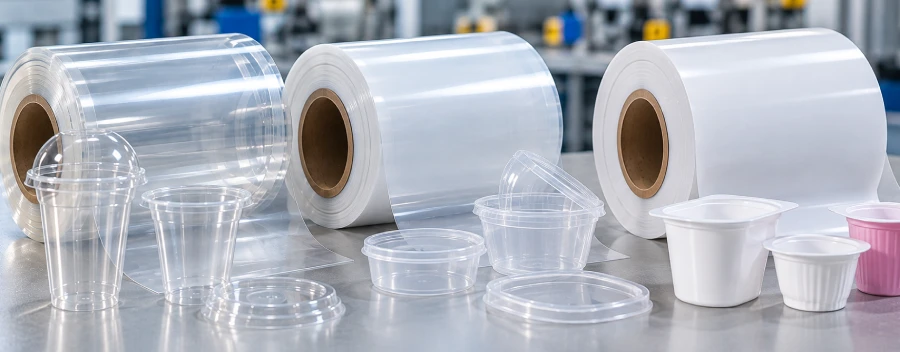
คู่มือการเลือกแผ่นที่ใช้งานได้จริงสำหรับการเทอร์โมฟอร์ม ผู้ผลิตและผู้แปรรูปบรรจุภัณฑ์เลือกใช้ PET PP หรือ PS/HIPS แผ่นม้วนสำหรับถ้วยเครื่องดื่มเย็น, ฝาถ้วย ถ้วยโยเกิร์ตและผลิตภัณฑ์นม ถ้วยของหวาน และบรรจุภัณฑ์เทอร์โมฟอร์มที่เกี่ยวข้อง
ตอบด่วน
สำหรับ ถ้วยเครื่องดื่มเย็นใสและฝาปิดใส, โดยปกติ PET จะเป็นเส้นทางแผ่นเทอร์โมฟอร์มแรกในการประเมิน สำหรับการใช้งานที่ต้องการ ทนความร้อนได้ดีกว่าหรือความเข้ากันได้ของบรรจุภัณฑ์แบบ PP, โดยทั่วไปแล้ว PP จะเป็นจุดเริ่มต้นที่เกี่ยวข้องมากกว่า สำหรับ โยเกิร์ต นม และถ้วยของหวานที่คัดสรร, PS/HIPS ยังคงเป็นเส้นทางวัสดุที่สำคัญซึ่งมีความแข็งแกร่ง จำเป็นต้องมีการขึ้นรูปที่มีประสิทธิภาพและมีลักษณะทึบแสงหรือสี
การเลือกแผ่นงานสุดท้ายควรพิจารณาด้วย รูปทรงของถ้วยหรือฝา เกจสตาร์ท ความแข็งของขอบล้อ ความใสหรือสี ความลึกของการขึ้นรูป วิธีการปิด ความกว้างของม้วนและสภาวะเทอร์โมฟอร์มตามจริง
01 เลือกวัสดุแผ่นจากการใช้งานถ้วยหรือฝา
ถ้วยเครื่องดื่มเย็น ถ้วยโยเกิร์ต และฝาที่ขึ้นรูปด้วยความร้อนก็สามารถทำได้ ผลิตจากม้วนแผ่นแต่ไม่จำเป็นเสมอไป ต้องการวัสดุหรือข้อกำหนดแผ่นเดียวกัน
เริ่มด้วยการสมัครแพ็คเกจ ลักษณะที่ต้องการ สภาวะอุณหภูมิและระบบปิด ปัจจัยเหล่านี้ โดยปกติจะจำกัดเส้นทางวัสดุให้แคบลงก่อนที่จะมีเกจแบบละเอียด และมีการหารือเกี่ยวกับข้อกำหนดเฉพาะของม้วน
| ข้อกำหนดการสมัคร | วัสดุที่จะประเมินก่อน | การพิจารณาซื้อแผ่น |
|---|---|---|
| ถ้วยเครื่องดื่มเย็นใส | PET | ความใส ความแข็ง ความลึกของการขึ้นรูป คุณภาพขอบ เกจ และรูปลักษณ์ |
| ฝาถ้วยเทอร์โมฟอร์มใส | PET | ความชัดเจน, รูปทรงแบบ snap-fit, ความคมชัดของขอบล้อ, คุณภาพการตัดแต่งและความสม่ำเสมอของมิติ |
| การใช้ถ้วยหรือฝาปิดที่มีอุณหภูมิสูงกว่า | PP | อุณหภูมิการใช้งานจริง ความแข็ง การขึ้นรูปหน้าต่าง ความเข้ากันได้ของเกจและการปิด |
| โยเกิร์ตหรือถ้วยนม | ป.ล./สะโพก | ความแข็งแกร่ง ความต้องการรับแรงกระแทก ความลึกของถ้วย คุณภาพหน้าแปลน สี และระบบซีล |
| ถ้วยขนมทึบแสงหรือสี | PS/HIPS หรือ PP | ลักษณะที่ปรากฏ, ความฝืด, อุณหภูมิ, การขึ้นรูปความลึกและวิธีการปิดที่ต้องการ |
| ถ้วยและฝาปิดจัดมาให้เป็นระบบจับคู่ | วัสดุขึ้นอยู่กับการออกแบบบรรจุภัณฑ์ | ขนาดขอบล้อ ความพอดีของฝา อุณหภูมิ ความแข็งแกร่งและประสิทธิภาพการปิดควร ได้รับการประเมินร่วมกัน |
02 ระบุเกจเริ่มต้นจากเรขาคณิตและความแข็งแกร่งที่ต้องการ
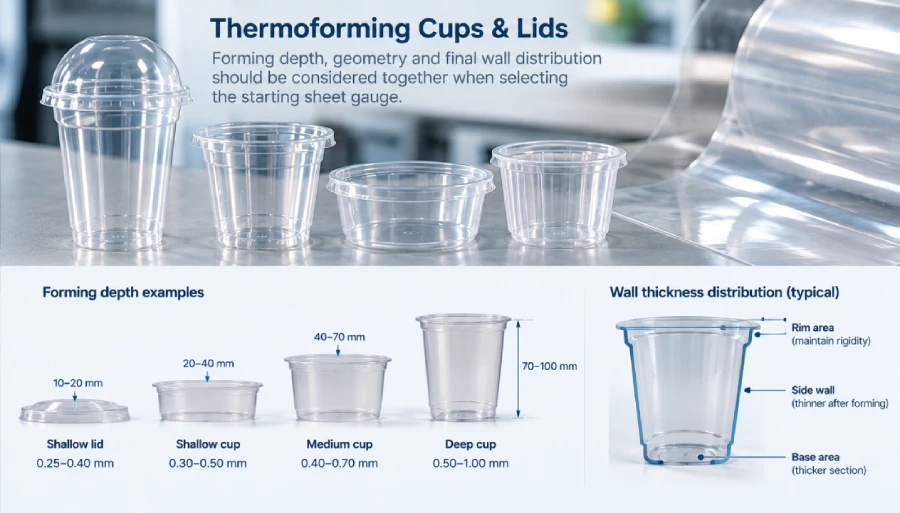
ความหนาของแผ่นมีผลมากกว่าปริมาณพลาสติก ในส่วนที่ทำเสร็จแล้ว ระหว่างการเทอร์โมฟอร์ม การเริ่มต้น แผ่นยืดเป็นรูปทรงเรขาคณิตของถ้วยหรือฝาเปลี่ยนแปลง ความหนาของผนังตลอดส่วนที่ขึ้นรูป
ถ้วยที่มีความลึกมักจะต้องใช้วัสดุมากขึ้น กระจายตัวมากกว่าฝาตื้น ในเวลาเดียวกัน การเพิ่มเกจสตาร์ทเพียงอย่างเดียวไม่รับประกัน การขึ้นรูปที่ดีขึ้นหรือแพ็คเกจสำเร็จรูปที่ดีขึ้น
สิ่งนี้มีประโยชน์ ช่วงอ้างอิงแอปพลิเคชัน, not DESU’s manufacturing thickness limit. Final starting gauge should be selected according to material, cup or lid geometry, forming depth, required rigidity, rim design and thermoforming conditions.
Deep cups require more attention to wall distribution than shallow lids or low-profile parts.
ขอบล้อที่ขึ้นรูปจะต้องคงความมั่นคงเพียงพอสำหรับ การตัดแต่ง การปิดฝา การปิดผนึก หรือข้อกำหนดการปิดอื่น ๆ
ควรประเมินความแข็งของแก้มยางและขอบล้อ หลังจากการขึ้นรูปมากกว่าจากเกจระบุแผ่นเพียงอย่างเดียว
03 เปลี่ยนการเลือกวัสดุให้เป็นข้อกำหนดเฉพาะของม้วนการผลิต
“PET 0.5 mm” หรือ “แผ่น PS สำหรับถ้วยโยเกิร์ต” ไม่ใช่ ข้อกำหนดการผลิตที่สมบูรณ์ ม้วนที่ซื้อมา จะต้องตรงกับเส้นเทอร์โมฟอร์มและเค้าโครงแม่พิมพ์ด้วย และข้อกำหนดแพ็คเกจสำเร็จรูป
พารามิเตอร์ที่ต้องยืนยันก่อนการผลิต
เหตุใดความกว้างม้วนจึงควรเป็นไปตามเค้าโครงแม่พิมพ์
แม่พิมพ์ถ้วยและฝาปิดมักมีหลายช่อง ความกว้างของม้วนจึงควรตรงกับเค้าโครงเครื่องมือ และความกว้างของการป้อนเครื่องแทนที่จะเลือกอย่างอิสระ ความกว้างที่ถูกต้องช่วยรักษาความเข้ากันได้ของเครื่องจักร ในขณะที่ควบคุมของเสียที่ขอบและการใช้วัสดุ
04 จับคู่แผ่นงานกับข้อกำหนดการปิดถ้วยหรือฝาปิด
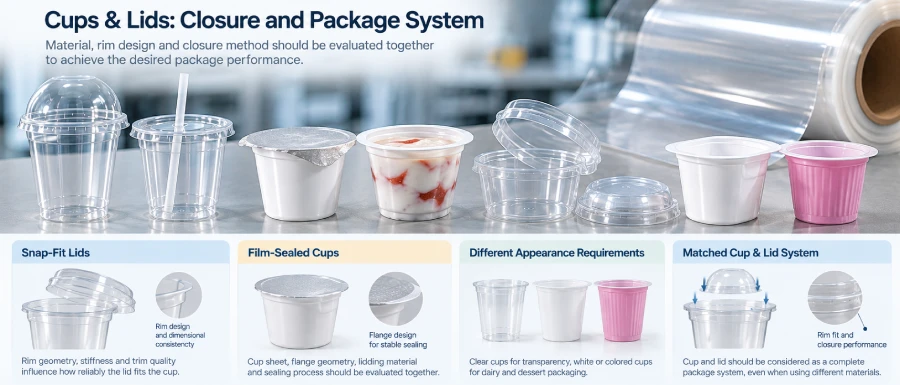
ส่วนที่ขึ้นรูปไม่ทำงานแยกจากส่วนที่เหลือ ของแพ็คเกจ ถ้วยอาจต้องมีฝาปิดเทอร์โมฟอร์มแบบ snap-fit ฟิล์มปิดผนึกหรือระบบปิดอื่นในขณะที่ต้องมีฝาปิด รักษาขนาดและความแข็งแกร่งที่จำเป็นเพื่อให้พอดีกับถ้วย
ฝาปิดแบบ Snap-Fit
เรขาคณิตของขอบล้อ ความสม่ำเสมอของมิติ ความแข็ง และคุณภาพการตัดแต่งล้วนส่งผลต่อความน่าเชื่อถือ ฝาปิดเทอร์โมฟอร์มพอดีกับถ้วย
ถ้วยปิดผนึกด้วยฟิล์ม
สำหรับโยเกิร์ต ผลิตภัณฑ์นม หรือถ้วยปิดผนึกด้วยฟิล์มอื่นๆ แผ่น รูปทรงของหน้าแปลน วัสดุที่ใช้ปิดฝา และกระบวนการปิดผนึกควรได้รับการประเมินร่วมกัน
รูปร่าง & พื้นผิว
ถ้วย PET แบบใส เน้นความโปร่งใสในขณะที่ ถ้วยนมและของหวานอาจต้องใช้ธรรมชาติ แผ่นสีขาวหรือสีขึ้นอยู่กับการออกแบบบรรจุภัณฑ์
05 Approve the Sheet on the Actual Cup or Lid Tool
Incoming sheet thickness and appearance are important, but the final approval point is how the sheet behaves on the intended thermoforming machine and mold.
This is especially important when changing material, reducing gauge, producing a deeper cup, introducing a new lid design or changing the package closure system.
วัสดุ ขนาด ความกว้าง ลักษณะ และข้อกำหนดในการปิด
ประมวลผลแผ่นงานตามที่ต้องการ เครื่องมือเทอร์โมฟอร์มถ้วยหรือฝา
ตรวจสอบผนัง ฐาน ขอบ ความชัดเจน ความแข็งและพฤติกรรมการตัดแต่ง
ยืนยันความพอดีของฝาปิดหรือประสิทธิภาพการปิดผนึก ก่อนที่จะมีการผลิตตามปกติ
สิ่งที่ควรตรวจสอบหลังจากการขึ้นรูป?
- การกระจายความหนาของผนังและฐาน
- ความสม่ำเสมอของมิติถ้วยหรือฝา
- คำจำกัดความของขอบและหน้าแปลน
- ความแข็งแกร่งของแก้มยางหลังจากการขึ้นรูป
- ความชัดเจนหรือลักษณะพื้นผิวตามที่ต้องการ
- ไวท์เทนนิ่งหรือความเครียดที่มองเห็นได้
- คุณภาพการตัดแต่งและสภาพขอบ
- ความพอดีของฝาปิดหรือการปิดผนึก
- การวางซ้อนและการทำลายตามความเหมาะสม
วัตถุประสงค์ของการทดลองคือเพื่อยืนยันว่าได้รับการคัดเลือก ข้อกำหนดแผ่นทำงานได้อย่างน่าเชื่อถือกับลูกค้า แม่พิมพ์ เครื่องจักร รูปทรง และระบบปิด
06 สิ่งที่ต้องส่ง DESU เพื่อซื้อถ้วย & แผ่นปิด RFQ
หากคุณผลิตถ้วยหรือฝาอยู่แล้ว ให้เริ่มด้วยของคุณ ข้อกำหนดแผ่นปัจจุบัน สำหรับโครงการใหม่ให้ส่ง ข้อมูลต่อไปนี้ให้มากที่สุดเท่าที่คุณมี
วัสดุ: PET / PP / PS-HIPS / ยังไม่ตัดสินใจ
ความหนาของแผ่น: ___ มม. / ยังไม่ตัดสินใจ
ความกว้างม้วน: ___ มม
รูปร่าง: ใส / ธรรมชาติ / ขาว / มีสี
ขนาดถ้วยหรือฝาปิด: ___
ความลึกของการขึ้นรูป: ___ มม
อุณหภูมิในการเติม/ใช้งาน: ___
ปิด: ฝาปิดแบบ snap-fit / ฟิล์มซีล / อื่นๆ / ยังไม่ได้กำหนด
ความกว้างของการป้อนเครื่อง: ___ มม. / ไม่ทราบ
ข้อกำหนดน้ำหนักแกน / ม้วน OD / ม้วน: ___ / ปฏิบัติตามคำแนะนำของซัพพลายเออร์
ตัวอย่างการวาดหรือขึ้นรูป: ใช้ได้ / ไม่พร้อมใช้งาน
ปริมาณทดลอง: ___
ความต้องการการผลิตโดยประมาณ: ___
หากยังไม่ทราบค่าบางค่า ให้เปิดไว้ ฉลากแผ่นปัจจุบัน การวาดถ้วยหรือฝา ตัวอย่างที่เกิดขึ้น หรือข้อมูลเครื่องมักจะให้บริบทที่เพียงพอ เพื่อจำกัดสเปคเริ่มต้นให้แคบลง
07 คำถามที่พบบ่อย — การซื้อแผ่นเทอร์โมฟอร์มสำหรับถ้วย & ฝาปิด
วัสดุแผ่นใดที่มักใช้ทำถ้วยเครื่องดื่มเย็นแบบใส?
PET เป็นวัสดุตั้งต้นที่ใช้งานได้จริงสำหรับความใสหลายอย่าง แก้วเครื่องดื่มเย็นๆ เพราะการใช้งานทั่วไป ต้องการความโปร่งใสที่ดีและความแข็งแกร่งของชิ้นส่วนที่ขึ้นรูป การคัดเลือกครั้งสุดท้ายควรคำนึงถึงความลึกของถ้วยด้วย เกจ การออกแบบขอบล้อ และสภาพการขึ้นรูปจริง
แผ่น PS หรือ HIPS สามารถใช้กับถ้วยโยเกิร์ตและผลิตภัณฑ์นมได้หรือไม่
ใช่. PS/HIPS เป็นวัสดุเทอร์โมฟอร์มที่สำคัญ เส้นทางโยเกิร์ต ผลิตภัณฑ์นม และถ้วยของหวานที่คัดสรร โดยเฉพาะที่มีลักษณะทึบแสงหรือมีสี จำเป็นต้องมีความแข็งแกร่งและการขึ้นรูปที่มีประสิทธิภาพ ข้อกำหนดเฉพาะของแผ่นงานที่แน่นอนควรตรงกัน รูปทรงของถ้วย ความต้องการแรงกระแทก และระบบซีล
เมื่อใดจึงควรพิจารณา PP สำหรับถ้วยหรือฝาปิดที่ขึ้นรูปด้วยความร้อน
โดยทั่วไปแล้ว PP คุ้มค่าที่จะประเมินว่าบรรจุภัณฑ์อยู่ที่ไหน ต้องทนต่ออุณหภูมิที่สูงกว่าหรือที่ไหน ความเข้ากันได้ของแพ็คเกจแบบ PP เป็นสิ่งสำคัญ ควรระบุอุณหภูมิการบรรจุและการใช้งานจริง เมื่อพูดถึงข้อกำหนดของแผ่นงาน
สั่งถ้วยและฝาปิดมีความหนาแผ่นเท่าไรคะ?
ช่วงอ้างอิงการใช้งานจริงคือ 0.25–1.20 มมแต่นี่ไม่ใช่ ขีดจำกัดความหนาในการผลิตของ DESU หรือแบบสากล คำแนะนำ ควรเลือกมาตรวัดเริ่มต้น ตามวัสดุ, การขึ้นรูปความลึก, รูปทรง, ต้องการความแข็งแกร่งและการกระจายผนังขั้นสุดท้าย
ถ้วยและฝาควรใช้วัสดุเดียวกันหรือไม่?
ไม่จำเป็น. การเลือกใช้วัสดุขึ้นอยู่กับ การออกแบบบรรจุภัณฑ์ ความต้องการอุณหภูมิ ลักษณะที่ปรากฏ รูปทรงขอบล้อและระบบปิด ถ้วยและฝาปิด ควรได้รับการประเมินว่าเป็นแพ็คเกจที่ตรงกันแม้ว่าเมื่อใดก็ตาม มีการใช้เส้นทางวัสดุที่แตกต่างกัน
ฉันควรเตรียมอะไรบ้างเมื่อพัฒนาถ้วยโยเกิร์ตใหม่
ระบุขนาดและความลึกของถ้วยตามวัสดุที่ต้องการ ถ้าทราบสีหรือลักษณะที่ต้องการ, ไส้และ สภาพการเก็บรักษา วิธีการปิดผนึก ความกว้างม้วน หรือ ความกว้างของการป้อนเครื่องและรูปวาดที่มีอยู่ หรือตัวอย่างอ้างอิง
DESU ผลิตถ้วยและฝาปิดสำเร็จรูปหรือไม่
ไม่ DESU จำหน่ายแผ่นพลาสติกเทอร์โมฟอร์มและ ม้วนแผ่นให้กับผู้ผลิตถ้วย ฝา และบรรจุภัณฑ์ ที่เทอร์โมฟอร์มผลิตภัณฑ์สำเร็จรูป
การจัดหาแผ่นม้วนสำหรับถ้วยหรือฝา?
ส่งใบสมัคร วัสดุปัจจุบัน ความหนา มาให้เรา และความกว้างม้วน สำหรับโปรเจ็กต์ใหม่ ให้รวมถ้วยด้วย หรือขนาดฝา การขึ้นรูป ความลึก อุณหภูมิ และ ข้อกำหนดในการปิด เราสามารถใช้ข้อมูลนั้นได้ เพื่อหารือเกี่ยวกับข้อกำหนดแผ่นเริ่มต้นที่ใช้งานได้จริง สำหรับไลน์เทอร์โมฟอร์มของคุณ