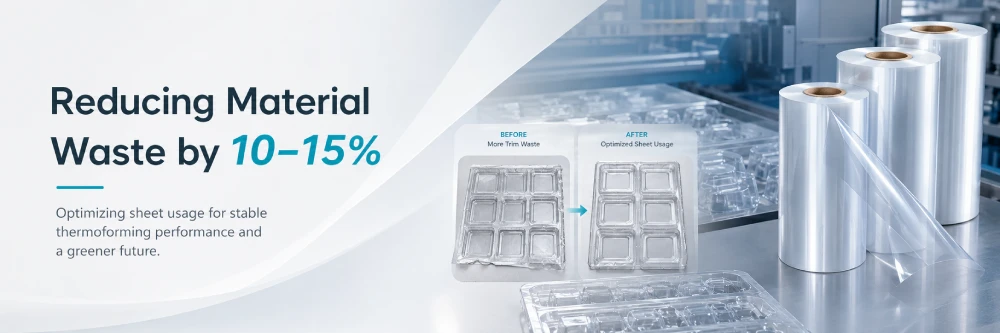
تطبيق مميز · الكؤوس & اغطية
كيفية اختيار ورقة التشكيل الحراري للأكواب & اغطية
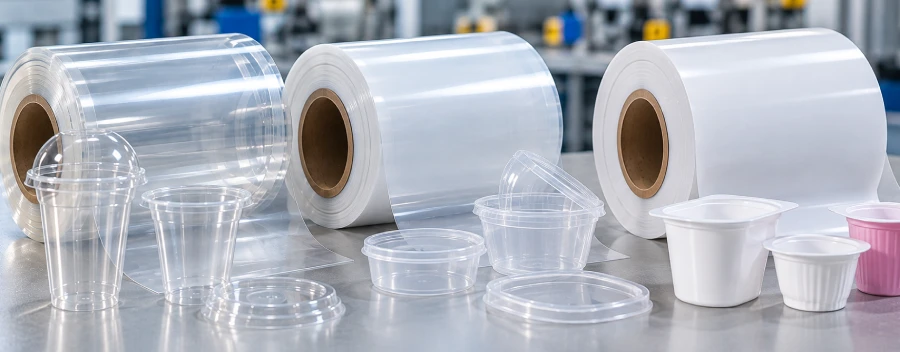
دليل عملي لاختيار الورقة للتشكيل الحراري المصنعون ومحولو التعبئة والتغليف يختارون PET، لفات صفائح PP أو PS/HIPS لأكواب المشروبات الباردة، أغطية الأكواب، وأكواب الزبادي والألبان، وأكواب الحلوى والتغليف الحراري ذي الصلة.
إجابة سريعة
ل أكواب مشروبات باردة شفافة وأغطية شفافة, عادة ما يكون PET هو أول مسار لصفائح التشكيل الحراري يتم تقييمه. للتطبيقات التي تتطلب مقاومة أفضل للحرارة أو توافق الحزمة القائمة على PP, تعتبر PP بشكل عام نقطة البداية الأكثر أهمية. ل الزبادي ومنتجات الألبان وأكواب الحلوى المختارة, يبقى PS/HIPS طريقًا ماديًا مهمًا حيث الصلابة، مطلوب تشكيل فعال ومظهر معتم أو ملون.
وينبغي أيضا النظر في اختيار الورقة النهائية هندسة الكوب أو الغطاء، مقياس البداية، صلابة الحافة، الوضوح أو اللون، عمق التشكيل، طريقة الإغلاق، عرض اللفة وظروف التشكيل الحراري الفعلية.
01 اختر المادة الورقية من تطبيق الكوب أو الغطاء
قد يكون كل من كوب المشروبات الباردة وكوب الزبادي والغطاء الحراري يتم إنتاجها من لفات الصفائح، ولكن ليس بالضرورة تحتاج إلى نفس مواصفات المادة أو الورقة.
ابدأ بتطبيق الحزمة والمظهر المطلوب، ظروف درجة الحرارة ونظام الإغلاق. هذه العوامل عادةً ما يتم تضييق مسار المواد قبل القياس التفصيلي وتناقش مواصفات اللفة.
| متطلبات التطبيق | المواد للتقييم أولا | اعتبارات شراء الورقة |
|---|---|---|
| كوب مشروب بارد شفاف | حيوان أليف | الوضوح، والصلابة، وعمق التشكيل، جودة الحافة وقياسها ومظهرها. |
| غطاء كوب شفاف على شكل حراري | حيوان أليف | الوضوح، والهندسة الملائمة، وتعريف الحافة، جودة القطع واتساق الأبعاد. |
| تطبيق كوب أو غطاء بدرجة حرارة أعلى | ص | درجة حرارة الاستخدام الفعلية، والصلابة، تشكيل النافذة والقياس والتوافق مع الإغلاق. |
| كوب زبادي أو لبن | PS / الوركين | الصلابة، متطلبات التأثير، عمق الكأس، جودة الشفة واللون ونظام الختم. |
| كوب حلوى غير شفاف أو ملون | بس / الوركين أو ب | المظهر، الصلابة، درجة الحرارة، عمق التشكيل وطريقة الإغلاق المطلوبة. |
| يتم توفير الكوب والغطاء كنظام مطابق | المواد تعتمد على تصميم الحزمة | أبعاد الحافة، الغطاء مناسب، درجة الحرارة، يجب أن تكون الصلابة وأداء الإغلاق يتم تقييمها معا. |
02 Specify Starting Gauge From Geometry and Required Rigidity
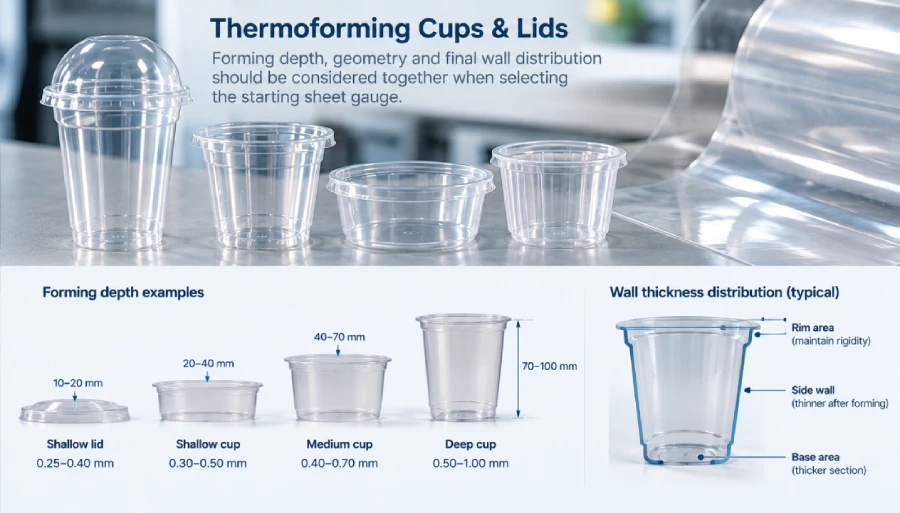
سمك الورقة يؤثر على أكثر من كمية البلاستيك في الجزء النهائي. أثناء التشكيل الحراري، البداية تمتد الورقة إلى هندسة الكوب أو الغطاء، وتتغير سمك الجدار عبر الجزء المشكل.
عادة ما يضع الكوب الأعمق متطلبات أكبر على المواد التوزيع من غطاء ضحل. في الوقت نفسه، مجرد زيادة مقياس البداية لا يضمن تشكيل أفضل أو حزمة نهائية أفضل.
هذا مفيد النطاق المرجعي للتطبيق, not DESU’s manufacturing thickness limit. Final starting gauge should be selected according to material, cup or lid geometry, forming depth, required rigidity, rim design and thermoforming conditions.
Deep cups require more attention to wall distribution than shallow lids or low-profile parts.
The formed rim must remain stable enough for التشذيب، ملاءمة الغطاء، الختم أو متطلبات الإغلاق الأخرى.
Sidewall and rim stiffness should be evaluated بعد التشكيل وليس من مقياس الصفائح الاسمية وحده.
03 تحويل اختيار المواد إلى مواصفات لفة الإنتاج
"PET 0.5 مم" أو "ورقة PS لأكواب الزبادي" ليست عبارة عن مواصفات الإنتاج الكاملة. لفة شراؤها يجب أن يتطابق أيضًا مع خط التشكيل الحراري وتخطيط القالب ومتطلبات الحزمة النهائية.
المعلمات للتأكيد قبل الإنتاج
لماذا يجب أن يتبع عرض اللفة تخطيط القالب
غالبًا ما تحتوي قوالب الأكواب والأغطية على تجاويف متعددة. لذلك يجب أن يتطابق عرض اللفة مع تخطيط الأدوات وعرض تغذية الماكينة بدلاً من تحديده بشكل مستقل. يساعد العرض الصحيح في الحفاظ على توافق الجهاز مع التحكم في نفايات الحواف واستخدام المواد.
04 قم بمطابقة الورقة مع متطلبات إغلاق الكوب أو الغطاء
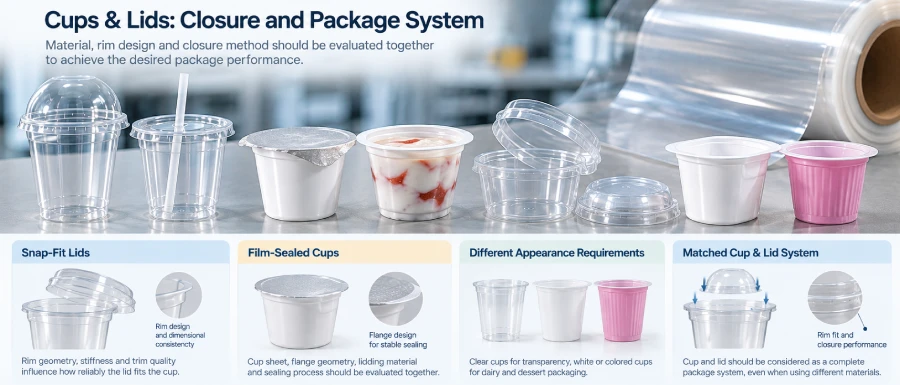
الجزء المشكل لا يعمل بشكل مستقل عن الباقي من الحزمة. قد يحتاج الكوب إلى غطاء مُشكل بالحرارة، فيلم الختم أو نظام إغلاق آخر، في حين يجب أن يكون الغطاء الحفاظ على الأبعاد والصلابة اللازمة لتناسب الكأس.
أغطية ملائمة
Rim geometry, dimensional consistency, stiffness and trim quality all influence how reliably a thermoformed lid fits the cup.
Film-Sealed Cups
For yogurt, dairy or other film-sealed cups, the sheet, flange geometry, lidding material and sealing process should be evaluated together.
مظهر & سطح
Clear PET cups emphasize transparency, while dairy and dessert cups may require natural, white or colored sheet depending on the package design.
05 Approve the Sheet on the Actual Cup or Lid Tool
Incoming sheet thickness and appearance are important, but the final approval point is how the sheet behaves on the intended thermoforming machine and mold.
This is especially important when changing material, reducing gauge, producing a deeper cup, introducing a new lid design or changing the package closure system.
Material, gauge, width, appearance and closure requirements.
Process the sheet on the intended cup or lid thermoforming tooling.
Check walls, base, rim, clarity, stiffness and trim behavior.
Confirm lid fit or sealing performance before regular production supply.
ما الذي يجب التحقق منه بعد التشكيل؟
- Wall and base thickness distribution
- Cup or lid dimensional consistency
- تعريف الحافة والشفة
- Sidewall rigidity after forming
- Clarity or surface appearance where required
- Whitening or visible stress
- Trim quality and edge condition
- غطاء مناسب أو أداء الختم
- التراص والإزالة عند الاقتضاء
الغرض من التجربة هو التأكد من أن المختار مواصفات الورقة تعمل بشكل موثوق مع العميل القالب والآلة والهندسة ونظام الإغلاق.
06 ماذا ترسل DESU للحصول على الكؤوس & ورقة الأغطية RFQ
إذا كنت قد قمت بالفعل بإنتاج الكوب أو الغطاء، فابدأ بالكوب أو الغطاء مواصفات الورقة الحالية لمشروع جديد، أرسل أكبر قدر من المعلومات التالية كما لديك.
مادة: PET / PP / PS-HIPS / لم يتم تحديده
سمك الورقة: ___ مم / لم يقرر
عرض لفة: ___ مم
مظهر: واضح / طبيعي / أبيض / ملون
أبعاد الكأس أو الغطاء: ___
عمق التشكيل: ___ مم
درجة حرارة الملء/الاستخدام: ___
إنهاء: غطاء مناسب / فيلم مانع للتسرب / أخرى / لم يتم تحديده
عرض تغذية الآلة: ___ مم / غير معروف
متطلبات وزن اللفة الأساسية/القطر الخارجي/اللفة: ___ / اتبع توصية المورد
رسم أو عينة مشكلة: متاح / غير متاح
الكمية التجريبية: ___
الطلب على الإنتاج المقدر: ___
إذا لم تكن بعض القيم معروفة بعد، فاتركها مفتوحة. تسمية الورقة الحالية، رسم الكأس أو الغطاء، عينة مشكلة أو يمكن أن توفر معلومات الآلة في كثير من الأحيان سياقًا كافيًا لتضييق مواصفات البداية.
07 الأسئلة الشائعة - شراء ورقة التشكيل الحراري للأكواب & اغطية
ما هي مادة الصفائح المستخدمة بشكل شائع في أكواب المشروبات الباردة الشفافة؟
يعتبر PET مادة انطلاق عملية للكثيرين أكواب المشروبات الباردة لأن التطبيق عادة يتطلب شفافية جيدة وصلابة الأجزاء المشكلة. يجب أن يأخذ الاختيار النهائي في الاعتبار عمق الكوب، المقياس وتصميم الحافة وظروف التشكيل الفعلية.
هل يمكن استخدام ورق PS أو HIPS لأكواب الزبادي ومنتجات الألبان؟
نعم. PS/HIPS هي مادة هامة للتشكيل الحراري طريق الزبادي ومنتجات الألبان وأكواب الحلوى المختارة، خاصة عندما يكون المظهر معتمًا أو ملونًا، مطلوبة الصلابة والتشكيل الفعال. يجب أن تكون مطابقة للمواصفات الدقيقة للورقة هندسة الكوب ومتطلبات التأثير ونظام الختم.
متى يجب أن يؤخذ PP في الاعتبار بالنسبة للكوب أو الغطاء المشكل بالحرارة؟
PP بشكل عام يستحق تقييم مكان الحزمة يتطلب مقاومة درجات الحرارة أعلى أو أين يعد توافق الحزمة المستندة إلى PP أمرًا مهمًا. ينبغي توفير درجات الحرارة الفعلية للملء والاستخدام عند مناقشة مواصفات الورقة.
ما هو سمك الورقة الذي يجب أن أطلبه للأكواب والأغطية؟
النطاق المرجعي للتطبيق العملي هو 0.25-1.20 ملمولكن هذا ليس كذلك حد سمك تصنيع DESU أو عالمي توصية. يجب تحديد مقياس البداية وفقا للمادة، وعمق التشكيل، والهندسة، الصلابة المطلوبة وتوزيع الجدار النهائي.
هل يجب أن يستخدم الكوب وغطاءه نفس المادة؟
ليس بالضرورة. اختيار المواد يعتمد على تصميم العبوة، متطلبات درجة الحرارة، المظهر، هندسة الحافة ونظام الإغلاق. الكأس والغطاء ينبغي تقييمها كحزمة مطابقة حتى عندما يتم استخدام طرق مادية مختلفة.
ما الذي يجب أن أقدمه عند تطوير كوب الزبادي الجديد؟
توفير أبعاد الكأس وعمق المادة المقصودة إذا كان معروفًا، اللون أو المظهر المطلوب والحشو و ظروف التخزين، طريقة الختم، عرض اللفة أو عرض تغذية الماكينة وأي رسم متاح أو عينة مرجعية
هل تقوم شركة DESU بتصنيع الأكواب والأغطية الجاهزة؟
رقم DESU تقوم بتزويد الصفائح البلاستيكية بالحرارة و لفات الورق لمصنعي الأكواب والأغطية والتغليف التي تشكل المنتجات النهائية بالحرارة.
مصادر لفائف الورق للأكواب أو الأغطية؟
أرسل لنا طلبك والمواد الحالية والسمك وعرض لفة. لمشروع جديد، تشمل الكأس أو أبعاد الغطاء وعمق التشكيل ودرجة الحرارة و متطلبات الإغلاق. يمكننا استخدام تلك المعلومات لمناقشة مواصفات ورقة البداية العملية لخط التشكيل الحراري الخاص بك.