ELECTRONICS PACKAGING APPLICATION
ม้วนแผ่นสื่อกระแสไฟฟ้าสำหรับ IC & ถาดสารกึ่งตัวนำ
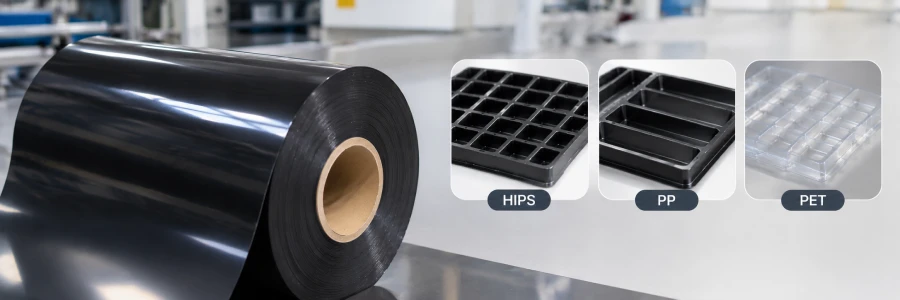
Conductive HIPS and PP are practical material choices for thermoformed trays used to handle ICs, semiconductor components and other ESD-sensitive electronic parts. Conductive PET provides an additional option where visibility or specific surface performance is required. At DESU, we manufacture conductive thermoforming sheet rolls for downstream converters, focusing on the agreed electrical properties, forming performance and consistency needed for repeat material supply.
01 Conductive Material Requirements for IC Trays
Semiconductor components, integrated circuits and precision electronic parts may require controlled electrical properties during handling and transportation. When the customer specifies a conductive packaging material, an ordinary plastic sheet or a standard anti-static grade may not meet the requirement.
The starting point for material purchasing is the electrical acceptance specification. This should identify the target resistance range, measurement method and whether the requirement applies to the original sheet, the formed tray or both.
We also ask whether the tray will be used once or repeatedly, whether component visibility is necessary and what rigidity or toughness the application requires. These factors determine which conductive base material is worth evaluating first.
02 Selecting Conductive HIPS, PP or PET Sheet
Conductive HIPS — Rigid, Cost-Conscious Trays
Conductive HIPS is our preferred starting material for many rigid, opaque electronic component trays. It offers useful stiffness, dimensional stability and thermoforming characteristics while providing a practical material cost for volume orders.
DESU supplies conductive HIPS with different functional options, including conductive additives incorporated into the material and surface-coated grades. Choosing between them depends on the required resistance, handling conditions and long-term purchasing requirements.
Conductive PP — Toughness and Repeated Handling
Conductive PP is worth evaluating when a tray needs greater toughness or is subject to repeated handling. Carbon-black-filled conductive PP is a common black material option, while coated conductive PP can be considered for projects with specified surface requirements.
PP should not automatically replace HIPS in every application. Material flexibility, rigidity, forming behavior and the intended use of the tray should guide the choice.
Conductive PET — Specialized Surface Requirements
Conductive PET is a more specialized option. It becomes relevant when the buyer needs transparent or near-transparent material with a controlled conductive surface, or when PET is already preferred for the packaging application.
The coating technology and required resistance must be confirmed together. Transparent conductive PET should not be treated as an identical substitute for carbon-black conductive HIPS or PP.
| วัสดุ | Preferred Purchasing Situation | ข้อพิจารณาหลัก |
|---|---|---|
| HIPS แบบนำไฟฟ้า | Rigid, opaque IC trays | Stiffness, cost and stable supply |
| PP นำไฟฟ้า | Tough or repeatedly handled trays | Durability and forming behavior |
| สัตว์เลี้ยงนำไฟฟ้า | Trays requiring visibility or specific surface properties | Clarity, coating and electrical performance |
03 Embedded and Coated Conductive Sheet Options
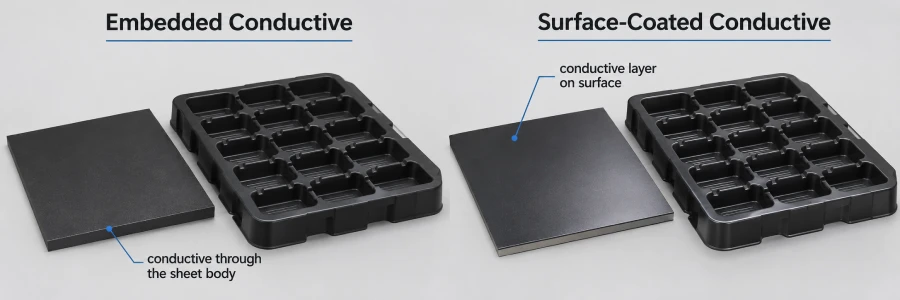
A conductive sheet specification should state how the conductive function is provided. The two main routes we discuss with buyers are bulk-modified conductive material and surface-coated conductive sheet.
Bulk-Modified Conductive HIPS and PP
In bulk-modified grades, conductive fillers such as carbon black are incorporated into the polymer during material production. This creates conductive performance throughout the sheet rather than relying only on a surface layer.
Black conductive HIPS and PP are practical options where customers prioritize functional stability and are comfortable with an opaque appearance. Filler distribution and resistance consistency remain important purchasing controls.
Surface-Coated Conductive Sheet
Coated conductive grades use a conductive treatment applied to the sheet surface. DESU offers coated conductive material options, including functional PET and HIPS sheets. Suitable PP coating options can also be reviewed.
Surface coating allows different base material and appearance choices, but the customer should confirm which side requires conductivity, whether both sides need treatment and how the coating performs after thermoforming.
| Conductive Route | Main Advantage | Point to Confirm |
|---|---|---|
| Bulk-modified HIPS / PP | Conductive function throughout the material | Resistance consistency and forming behavior |
| Coated HIPS / PP | Specified conductive surface on selected substrates | Coating side, adhesion and forming durability |
| Coated conductive PET | Potential transparency and controlled surface properties | Clarity, resistance and coating stability |
We do not recommend choosing a coated or bulk-modified grade based on price alone. For a repeat-volume project, electrical acceptance requirements and expected handling conditions should be considered together.
04 Electrical Resistance and Thermoforming Performance
Conductive sheet grades are often specified within a target electrical resistance range. For example, DESU’s conductive HIPS range includes grades around 10⁴–10⁶ Ω. The exact range must be matched to the customer’s test method and acceptance requirements.
Conductive PET and PP options can also be supplied for specified electrical targets, but a value quoted for one material or measurement method should not automatically be applied to another.
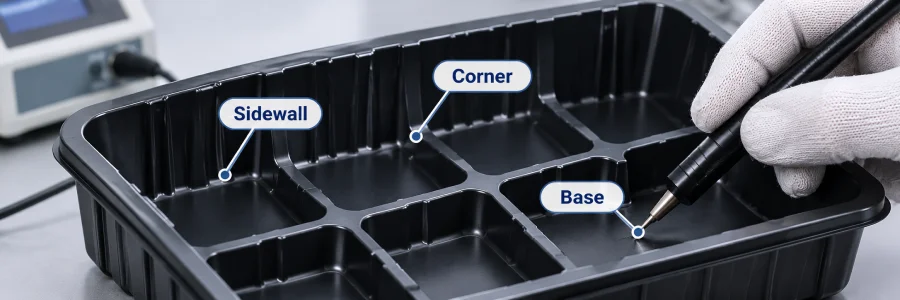
For thermoforming converters, the key question is whether the supplied material maintains suitable performance after heating and stretching. Deep cavities and thin-wall areas deserve particular attention when approving a conductive sheet grade.
With coated conductive sheets, the forming trial should check that the treated surface retains acceptable resistance. With carbon-black-filled grades, the final part should also be checked, since material distribution and forming conditions can affect electrical performance.
05 Custom Conductive Sheet Roll Specifications
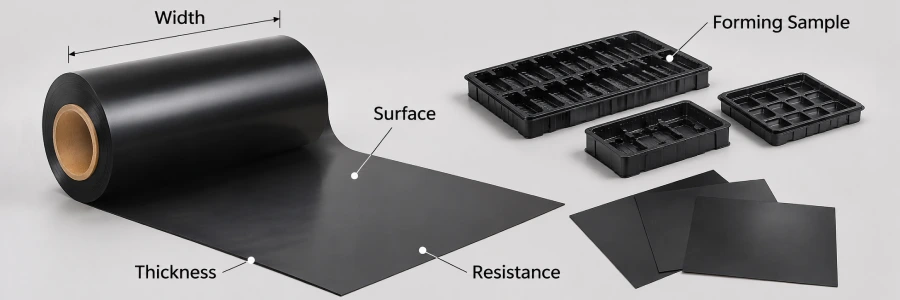
Electrical performance is only one part of a conductive sheet purchase. DESU manufactures thermoforming sheet rolls to match downstream production requirements, including material grade, thickness, width, color and roll packing.
For conductive HIPS and PP, the buyer should confirm whether a bulk-modified or coated material is required. For PET, coating type, transparency and treated-side requirements may be especially important.
Available dimensions vary by polymer and functional grade. Rather than applying one universal width or thickness range to every conductive sheet, we recommend confirming the specification for the selected material.
| RFQ Item | Information to Provide |
|---|---|
| Base polymer | HIPS, PP or PET |
| Conductive technology | Bulk-modified or coated |
| Electrical specification | Resistance range, test method and measurement conditions |
| Sheet dimensions | Thickness, width and tolerances |
| รูปร่าง | Black, opaque or specified transparency |
| Roll supply | Core, roll weight, packaging and quantity |
| แอปพลิเคชัน | Tray sample, cavity depth and handling conditions |
You can review our ม้วนแผ่นสะโพกนำไฟฟ้า - แผ่นสัตว์เลี้ยงนำไฟฟ้า และ ESD HIPS Sheet pages for material-specific information.
06 Sample Approval and Repeat Supply
When supplying a new conductive grade, we recommend starting with a sheet sample matched to the customer’s intended forming application. The trial should confirm sheet appearance, forming consistency and the agreed electrical acceptance range.
An existing specification or formed tray sample helps us evaluate the appropriate HIPS, PP or PET option. Buyers replacing a current supplier should also identify any concerns with resistance consistency, surface appearance or material performance.
Once a grade is approved, the agreed electrical specification, roll dimensions and relevant acceptance conditions should be retained for repeat orders. Consistent supply matters just as much as obtaining an acceptable first sample.
Have an existing conductive sheet specification or tray sample? Share your required material, resistance range, thickness, roll width and estimated quantity with our team for review.
ติดต่อ DESU พลาสติก →07 คำถามที่พบบ่อย
Is conductive HIPS or PP better for IC packaging trays?
Conductive HIPS is often the starting choice for rigid, cost-conscious trays. Conductive PP may be preferable where greater toughness or repeated handling is required. The target electrical specification must be met in either case.
Can conductive PET remain transparent?
Certain conductive PET coating systems can retain useful transparency. Appearance and electrical performance depend on the coating technology and specified resistance.
Can DESU provide coated and bulk-modified conductive sheets?
We can review conductive HIPS, PP and PET material options, including coated and bulk-modified grades according to the polymer and requested specification.
What information is needed for a conductive sheet quotation?
Please provide the base material, target resistance and test method, thickness, width, color or transparency requirement, and expected purchasing quantity. Existing samples or drawings are also useful.