CUPS & LIDS APPLICATION
Рулоны ПЭТ-листов для прозрачных крышек стаканов для холодных напитков
Clear PET sheet is widely selected for thermoformed cold drink cup lids because it combines transparency, useful rigidity and consistent forming performance. From flat straw-slot lids to raised dome lids, packaging converters need more than clear-looking material. Sheet gauge, surface quality and roll consistency all influence the finished appearance and production results. As a thermoforming sheet manufacturer, DESU supplies APET and RPET sheet rolls tailored to these purchasing requirements.
01 Why PET Sheet Is Preferred for Clear Cold Drink Lids
Cold drink lids are commonly used with iced coffee, juice, smoothies and other chilled beverages. Clear packaging allows the contents to remain visible, while the lid material needs sufficient rigidity to retain its intended shape during handling and use.
PET offers a practical combination of transparency, stiffness and thermoforming suitability. For buyers producing clear lids, this makes APET a sensible starting material rather than automatically considering every available packaging polymer.
However, a lid that looks clear is not necessarily made from the right sheet grade. Surface scratches, visible flow marks, uneven thickness and inconsistent forming behavior can still create problems during production.
02 Choosing APET or RPET Sheet Rolls
APET and RPET can both be considered for transparent cold drink lid applications. The more useful purchasing question is not simply which material is better, but which sheet grade consistently meets the required appearance, forming and recycled-content specifications.
| Листовой вариант | Suitable Buying Priority | Что подтвердить |
|---|---|---|
| Очистить АПЭТ | High clarity and a consistent appearance for transparent lids | Haze, surface quality, gauge and forming behavior |
| Clear RPET | Transparent lids requiring specified recycled content | Recycled content, color tone, clarity and batch consistency |
| Customized PET grade | Projects with specific surface or processing requirements | Surface treatment, approval samples and food-contact suitability |
With clear lids, even small changes in color tone or haze may be noticeable after forming and stacking. We therefore recommend approving RPET appearance using representative production samples rather than relying on the recycled-content percentage alone.
03 PET Sheet Requirements for Flat and Dome Lids
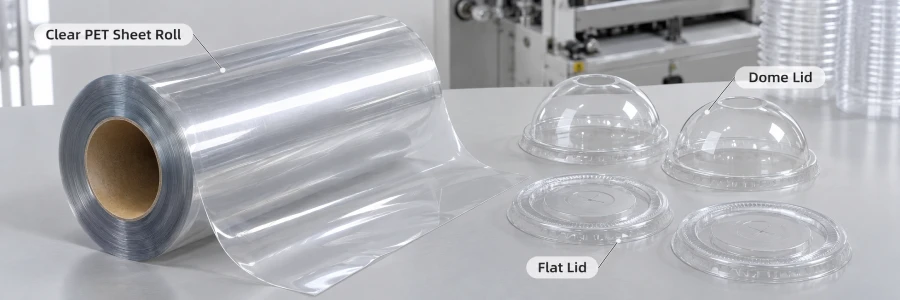
Different lid shapes place different demands on the thermoforming sheet. The base material may remain PET, but the required gauge and forming performance should be reviewed against the actual application.
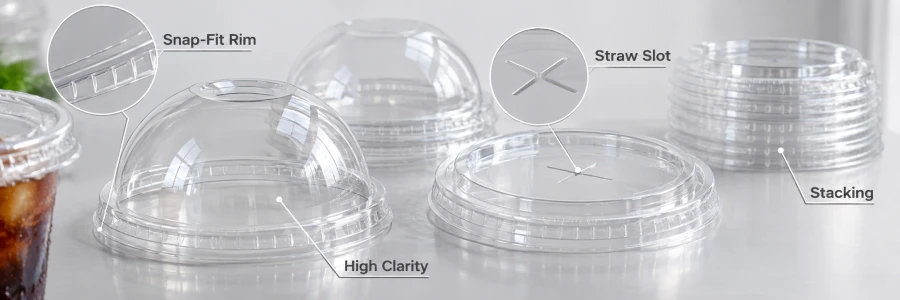
Flat Cold Drink Lids
Flat lids generally have a relatively shallow profile, although raised rims and drinking openings still require good material definition. Buyers should prioritize sheet gauge consistency, suitable stiffness and uniform surface appearance.
Dome Cold Drink Lids
Dome lids have a more pronounced formed profile. Their greater forming depth can make sheet thickness distribution and transparency after forming more important.
A grade that performs well for shallow flat lids should not automatically be approved for taller dome lids at the same gauge. The converter should check representative samples before committing to volume purchasing.
| Применение крышки | Sheet Purchasing Priority |
|---|---|
| Flat lid with straw slot | Gauge uniformity, rim definition and suitable stiffness |
| Raised dome lid | Forming depth, clarity after stretching and rigidity |
| Stackable clear lids | Consistent thickness, surface condition and forming stability |
04 Thickness, Transparency and Surface Quality
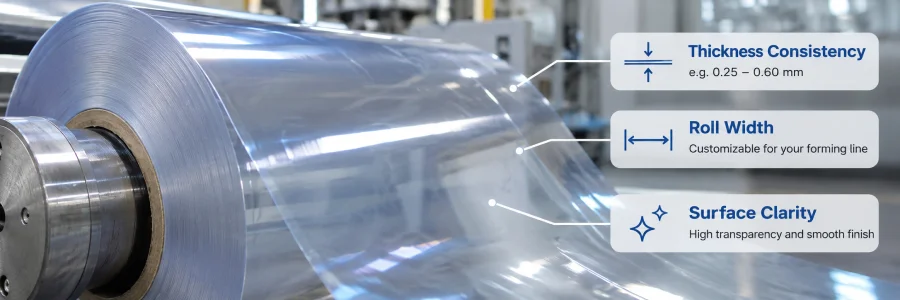
PET sheet thickness affects material consumption, lid rigidity and the way the sheet stretches during thermoforming. Choosing the thinnest available gauge is not always the most economical decision if the resulting lids do not meet customer requirements.
For thin-gauge clear lid projects, a starting thickness around 0.25–0.60 mm may be worth evaluating, depending on the lid profile and forming conditions. This is a preliminary selection range, not a universal specification. The final gauge should follow sample approval.
Transparency is equally important. The buyer should agree on acceptable color tone, haze, scratches, contamination and visible surface defects. These requirements matter especially when lids are displayed against brightly colored beverages.
Sheet surface behavior also deserves attention. Depending on the production process, suitable anti-block or surface-control options may help material handling. Any treatment should be reviewed alongside clarity, forming compatibility and the intended food-contact application.
05 Custom PET Sheet Roll Supply for Lid Manufacturers
For high-volume lid production, sheet consistency is often more valuable than a small difference in the initial material price. A stable roll specification helps converters repeat an approved result without unnecessary material changes.
DESU manufactures thermoforming PET sheet rolls with customized thickness, width and roll configurations. We can review APET and RPET options according to the required appearance, application and purchasing volume.
| Спецификация | Information for DESU |
|---|---|
| Материал | Clear APET or RPET, including required recycled content |
| Толщина | Target gauge and acceptable tolerance |
| Ширина рулона | Required width for the existing forming line |
| Появление | Clarity, color tone and surface acceptance limits |
| Roll details | Core size, roll weight and packing requirements |
| Volume | Trial quantity and estimated regular demand |
For repeat orders, we recommend retaining the approved grade and the agreed thickness, appearance and roll specifications. If the converter plans to reduce gauge for material savings, a separate forming trial is preferable to assuming the thinner sheet will behave identically.
06 Sample Approval Before Bulk PET Sheet Orders
Before changing PET suppliers or introducing a new grade, we recommend testing material under the converter’s regular forming conditions. The sample should represent the actual lid shape and target production gauge.
First, check whether the material produces the expected transparency and surface finish. Next, review the formed area’s rigidity, rim definition and consistency across representative samples. For RPET, the approved color tone and recycled-content specification should also be recorded.
Food-contact requirements should be confirmed for the intended market and application using the documentation applicable to the selected grade.
We prefer discussing a real lid sample or existing PET sheet specification before recommending a replacement material. This gives both the buyer and our team a clearer basis for approval.
Manufacturing clear cold drink lids? Send us your lid sample or drawing, PET grade preference, thickness, roll width and estimated purchasing quantity. Our team can review a suitable APET or RPET sheet roll option.
Связаться с DESU Plastic →07 Часто задаваемые вопросы
Is APET suitable for both flat and dome cold drink lids?
Yes. Clear APET can be evaluated for both applications. The suitable thickness and forming grade depend on the lid profile and required rigidity.
Can RPET be used for transparent cold drink lids?
Yes. RPET is an option when recycled content is required. Appearance, forming consistency and food-contact suitability should be checked for the selected grade.
Does the cup diameter determine PET sheet thickness?
Not by itself. Lid diameter, profile, rigidity and forming requirements should be considered together when selecting the sheet gauge.
Can DESU supply customized PET roll widths?
Yes. We manufacture PET thermoforming sheet rolls in customized widths and thicknesses according to the material grade and order requirements.
Does DESU manufacture finished cold drink lids?
Our supply focus is PET thermoforming sheet and roll material for downstream lid manufacturers, rather than finished disposable lids.