Thermoforming Material Selection Guide
PET, HIPS or PS for Cosmetic Inserts: Appearance, Fit and Finish
Clear, black, white or custom-colored: cosmetic packaging inserts can call for very different thermoforming sheets. PET, HIPS and PS each offer distinct material characteristics. The useful comparison is not simply which plastic looks better, but which sheet grade, surface finish and roll specification fit the converter’s production needs.
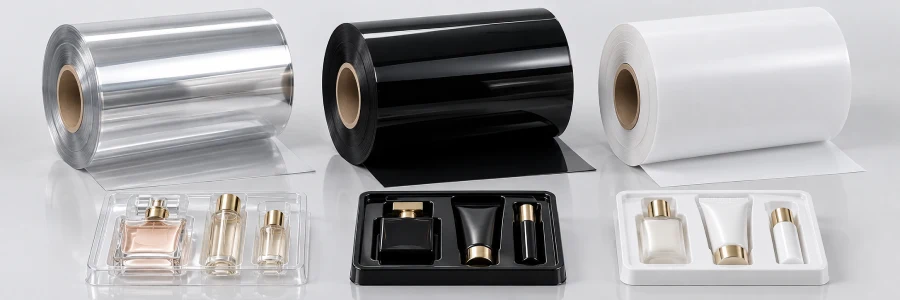
01 Start with the Sheet, Not Just the Finished Appearance
A transparent insert for a perfume set and a black insert for a skincare gift box may come from similar thermoforming processes, but they do not necessarily need the same plastic sheet.
Transparency, opacity, stiffness, surface finish and forming depth all influence the choice of starting material. A converter also has practical requirements: the sheet must feed consistently, form on the existing equipment and arrive in the correct roll format.
That is where the material discussion becomes more useful. Instead of treating “cosmetic packaging sheet” as a single product grade, consider what the project actually demands from the sheet:
- Clear or opaque material, with any specific color requirements.
- Gloss, matte or other specified sheet-surface appearance.
- Rigidity and forming behavior suited to the intended insert dimensions.
- Thickness consistency and roll specifications compatible with the production line.
These details help narrow the choice between PET and PS-based sheet without making unnecessary assumptions about the finished packaging.
02 PET, HIPS and PS: Where the Materials Differ
PET and polystyrene-based sheets are familiar thermoforming materials, but they serve different requirements. One important distinction is that HIPS is a modified type of polystyrene, not a separate polymer family.
For cosmetic inserts, the first choice often comes down to whether clear visibility or an opaque, colored material is required. The material grade then needs to satisfy the expected stiffness and forming conditions.
| مادة | Where It Fits | What to Consider |
|---|---|---|
| ورقة أبيت | Clear cosmetic inserts where transparency, clean appearance and rigidity are priorities. | Clarity, visible surface quality, thickness control and forming behavior at the required depth. |
| HIPS Sheet | Opaque inserts in black, white or specified colors, especially where impact-modified PS properties are useful. | Color consistency, surface finish, rigidity and the selected impact grade. |
| GPPS / Standard PS | Selected applications requiring a relatively rigid PS sheet, including grades where transparency is relevant. | Lower impact toughness than HIPS, forming depth and handling requirements. |
APET: A Natural Starting Point for Clear Inserts
When a packaging converter needs a transparent insert, APET is often the first material worth evaluating. Its clarity and rigidity make it suitable for many visible retail packaging applications.
Clear surfaces also make defects easier to notice. Scratches, haze, unwanted tint or inclusions that might be less obvious on an opaque sheet can affect the appearance of a transparent formed insert.
HIPS: More Than Simply a Black or White Sheet
HIPS is commonly supplied in opaque grades, including black and white, and can be produced in specified colors. Compared with general-purpose PS, its impact modification provides a different balance of toughness and rigidity.
The exact HIPS grade matters. A customer’s requested color, surface finish and forming conditions should be considered together rather than treating all HIPS rolls as interchangeable.
Where Does Standard PS Fit?
General-purpose PS can be considered for selected applications where its rigidity and appearance are suitable. Its lower impact toughness compared with HIPS should not be overlooked, particularly for demanding forming or handling conditions.
Explore DESU materials: لفة ورقة الحيوانات الأليفة و لفة ورقة الوركين و PS ورقة لفة .
03 Surface Finish Is a Sheet Specification
In cosmetic packaging, the visible surface receives more attention than it might in an ordinary industrial tray. This has a direct implication for the material order: appearance requirements should be part of the sheet specification, not an informal expectation.
For transparent PET, clarity and surface cleanliness may be the priority. For black or colored HIPS, the customer may be more concerned with color uniformity, gloss level or a particular surface texture.
Gloss, Matte and Color
A glossy sheet and a matte sheet can create noticeably different appearances after thermoforming. Some finishes may be influenced by surface texture, material grade and forming conditions.
Where the appearance must match an existing packaging program, a physical reference sample is more useful than a broad description such as “premium black” أو “high-gloss white.”
Scratches and Surface Marks
Scratch visibility depends on the material, color, surface condition and handling. Dark glossy surfaces can make some marks especially noticeable, while clear PET may show fine surface scratches under directional lighting.
If surface protection is a critical requirement, specify the expected performance and ask about the appropriate material or treatment option. Anti-scratch properties should not be assumed for every standard PET grade.
DESU also provides information on ورقة PET مضادة للخدش for projects with specific surface requirements.
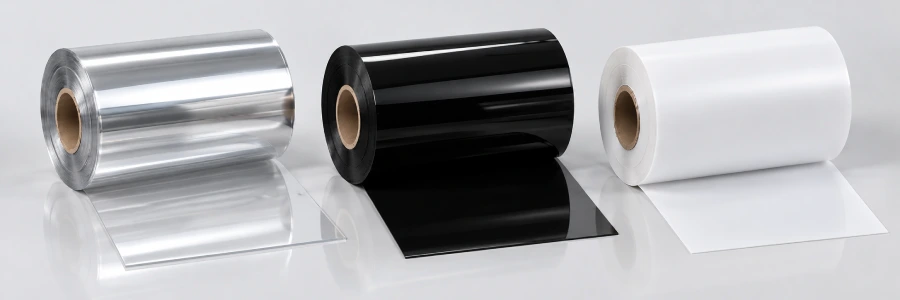
For repeat orders, the approved sample should serve as a practical reference for color and surface acceptance. That keeps the discussion focused on the supplied sheet rather than subjective impressions of a finished cosmetic display.
04 Thickness, Rigidity and Thermoforming Compatibility
Sheet thickness is often the first number on a purchasing inquiry. It is important, but the same gauge does not make PET, HIPS and GPPS behave identically.
Their mechanical properties and forming characteristics differ. Switching between materials therefore calls for more than copying the thickness from an existing order.
Starting Gauge Matters
The appropriate starting thickness depends on the forming depth, overall part dimensions and stiffness required after forming. A shallow insert and a deeper formed part may need different starting gauges even if the polymer is the same.
For an established production line, the existing sheet specification is a sensible reference point. When a material change is planned, representative sheet samples can be evaluated before confirming a new gauge.
Consistency Across the Roll
Nominal thickness alone does not tell the whole story. Thickness variation across the web can affect heating consistency and the distribution of material during forming.
Gauge tolerance, sheet width and production consistency are particularly relevant for converters running repeat orders at volume.
05 From Approved Sheet Sample to Repeat Roll Supply
A sheet sample may look suitable, but a commercial order has additional requirements. The agreed material grade, appearance and roll format need to be practical for the converter’s ongoing production.
The following details are worth specifying clearly:
- Material grade: APET, HIPS or another agreed PS grade, including any specific performance requirements.
- Color and finish: Clear, white, black, custom color or agreed surface appearance.
- Dimensions: Nominal thickness, tolerance and sheet width.
- Roll configuration: Core dimensions, roll diameter and any winding requirements.
- Acceptance standard: Relevant surface, color and material consistency criteria.
Not every cosmetic insert project needs a special coating or a complicated material structure. Quite often, selecting the right standard grade and agreeing on practical appearance criteria is the more effective approach.
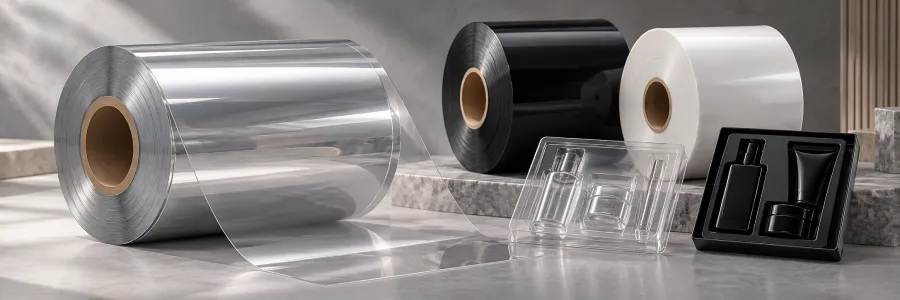
For a new project, a drawing or a previously used sheet specification can help clarify the required material. For a supplier change, the existing roll specification is often the most useful place to begin.
06 Request PET or HIPS Sheet Rolls for Cosmetic Inserts
Sourcing a new thermoforming sheet does not need to begin with a long technical report. If the existing material is already working well, its specification gives us a useful starting point.
If the project is new, a few details can help narrow the sheet options.
مادة & Roll Inquiry
- مادة: PET, HIPS or PS, including any preferred grade.
- Color / finish: Transparent, black, white, custom color, gloss or matte.
- Sheet size: Required thickness, width and tolerance if known.
- Roll format: Core size, diameter and winding requirements.
- طلب: Cosmetic insert type and approximate forming depth.
- Special requirements: Surface protection, color matching or other relevant sheet properties.
- Order information: Estimated volume, destination and sampling requirements.
DESU supplies thermoforming sheet and rolls for packaging converters. Send the available specifications or reference material to discuss an appropriate PET or PS/HIPS option.
07 الأسئلة المتداولة
Is HIPS always better than PET for black cosmetic inserts?
No. Both materials can be supplied in opaque colors depending on the grade. HIPS is a common option, but the selection should consider required stiffness, impact behavior, appearance and forming conditions.
Can standard PS replace HIPS at the same thickness?
Not automatically. GPPS and HIPS have different impact properties. The intended forming and handling requirements should be evaluated before substituting one grade for the other.
Can a cosmetic packaging converter request a particular sheet finish?
Yes. Share the required color, gloss, texture or surface reference. The available finish options and any additional treatments can then be reviewed for the selected material.
What is the quickest way to request a quotation for sheet rolls?
Provide the material, thickness, width, color or finish, estimated quantity and delivery destination. An existing sheet specification or physical sample is especially helpful when replacing a supplier.