PET Thermoforming Application Guide
วิธีเลือกแผ่น PET สำหรับถ้วยเครื่องดื่มเย็น
Selecting PET sheet for cold drink cups involves more than transparency. Sheet quality, forming behavior, cup rigidity, rim consistency and roll specifications all influence production results.
01 PET Sheet for Cold Drink Cup Manufacturing
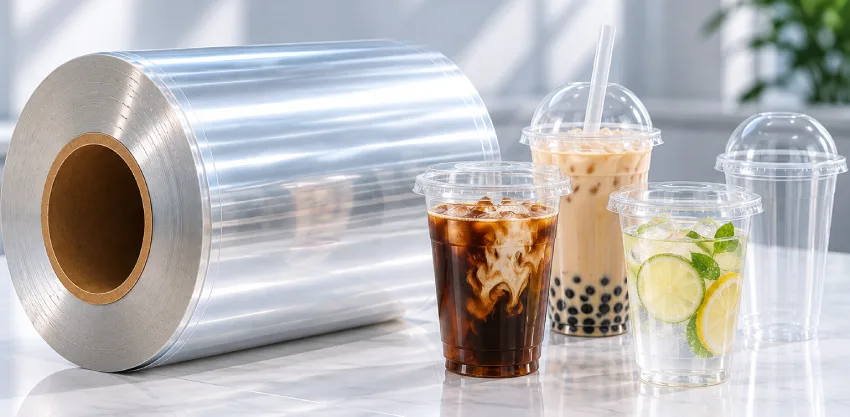
Clear disposable cups are widely used for iced coffee, bubble tea, cold beverages and takeaway drinks. For thermoforming manufacturers, the challenge is to produce cups with consistent transparency, adequate rigidity and reliable dimensions while maintaining efficient production.
PET, particularly APET sheet, is a common material choice for transparent cold drink cups. Its clarity, surface appearance and stiffness make it suitable for applications where customers want to see the beverage and its contents.
However, the performance of the finished cup depends on more than the PET material itself. Sheet thickness, heating conditions, forming depth, cup geometry and trimming accuracy all affect the final result.
02 Why PET Is Commonly Selected for Cold Drink Cups
PET is frequently selected for clear beverage cups because it provides a useful combination of optical appearance, rigidity and thermoforming capability.
ความชัดเจนและความเงางามสูง
Transparent PET allows customers to see the beverage, ice, fruit pieces or toppings inside the cup. This is particularly relevant for iced coffee, fruit tea and bubble tea, where product appearance contributes to presentation.
For sheet buyers, clarity should be evaluated together with haze, color consistency, visible particles and surface defects. A sheet that appears transparent in roll form may still show undesirable marks or uneven appearance after forming.
Useful Rigidity
PET provides stiffness that helps cold drink cups maintain their shape during normal filling and handling. Nevertheless, cup rigidity also depends on sheet gauge, forming depth, sidewall thickness distribution and cup geometry.
Thermoforming Compatibility
PET sheet can be processed into cups using suitable thermoforming equipment. Stable sheet thickness, consistent material behavior and appropriate heating control help converters achieve repeatable forming results.
For buyers comparing PET sheet suppliers, consistent quality between production batches is often more important than judging a single sample by appearance alone.
03 Key PET Sheet Requirements for Cup Production
The right PET sheet specification should be based on the cup design, forming equipment and expected production conditions rather than a universal thickness recommendation.
| Sheet Requirement | Why It Matters | สิ่งที่ต้องยืนยัน |
|---|---|---|
| ความหนา | Influences forming depth, rigidity and material consumption. | Cup dimensions, draw depth and required finished-wall performance. |
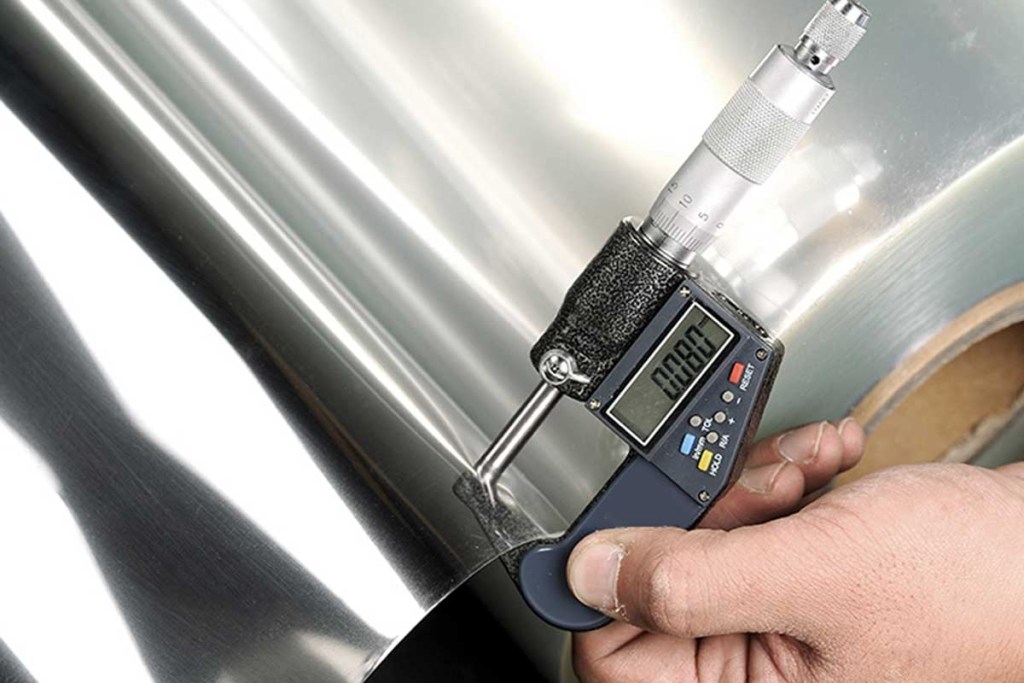
| Thickness Consistency | Helps maintain repeatable heating and forming behavior. | Gauge uniformity across the web and along the roll. |
| ความโปร่งใส | Determines the visual appearance of clear beverage cups. | Clarity, haze, color and visible surface defects. |
| Surface Quality | Affects appearance and handling during conversion. | Scratches, particles, contamination and surface consistency. |
| ความกว้างม้วน | Must suit the forming machine and cavity layout. | Web width, edge allowance and production layout. |
| การกำหนดค่าม้วน | Influences feeding and uninterrupted production. | Core diameter, roll diameter, winding and packaging. |
04 Thermoforming Considerations That Affect Cup Quality
Even when two PET sheet rolls have the same nominal thickness, their performance on a particular forming line may differ. The converter should evaluate material behavior under actual production conditions.
Sidewall Thickness Distribution
Tall cups and deep-draw designs can create significant material stretching. The bottom corners and lower sidewalls may become thinner than expected, even when the original sheet gauge is within specification.
Increasing the starting sheet thickness is not always the only solution. Heating balance, tooling design and forming parameters should also be reviewed.
Cup Rim and Lid Compatibility
The cup rim must remain dimensionally consistent to work with the intended lid. Variations in forming, cooling or trimming can affect lid fit and handling performance.
Cup manufacturers should test the actual production lid rather than assuming compatibility from nominal rim dimensions alone.
Stacking and Separation
Thermoformed cups are commonly stacked for packing and transportation. Excessive nesting friction or dimensional variation can make separation difficult during downstream operations.
Surface characteristics, cup design and forming consistency should be assessed together when denesting problems occur.
Consistent Roll Feeding
Roll width, winding quality and sheet tracking can influence production stability. A well-specified roll should match the machine’s feeding requirements and support consistent processing throughout the run.
05 Choosing PET Sheet for Different Cold Drink Cups
Although these applications commonly use transparent PET, their cup dimensions, appearance requirements and forming conditions may differ.
| แอปพลิเคชัน | Main Considerations | Sheet Selection Focus |
|---|---|---|
| Cold Beverage Cups | Clarity, handling rigidity and consistent rim dimensions. | Optical quality, gauge selection and forming stability. |
| Iced Coffee Cups | Clear presentation, ice contact and lid compatibility. | Transparency, finished-wall strength and rim consistency. |
| Bubble Tea Cups | Taller cup geometry, toppings visibility and closure requirements. | Draw behavior, sidewall thickness and cup-specific closure trials. |
The closure method should be confirmed early. A cup designed for a snap-on lid may have different rim requirements from one intended for heat-sealed film. Not every PET cup design or sheet formulation is automatically suitable for every sealing system.
Cold drink applications should also be distinguished from special low-temperature service. Ordinary chilled beverages and ice-containing drinks do not, by themselves, establish a requirement for a specially modified low-temperature PET grade.
For projects involving unusual cold-storage or freezing conditions, see our Low-Temperature Resistant PET Sheet for Ice Cups and confirm the actual temperature and performance requirements before selecting a material.
06 What to Include in Your PET Cup Sheet RFQ
A useful PET sheet inquiry should describe both the intended cup and the production equipment. This helps the sheet supplier recommend an appropriate specification or identify information that still needs confirmation.
PET Cold Drink Cup Sheet RFQ Checklist
- แอปพลิเคชัน: Cold drink, iced coffee or bubble tea cup.
- Cup dimensions: Capacity, height, diameter and approximate forming depth.
- ความหนาของแผ่น: Existing gauge or target range, if known.
- Optical requirements: Clear appearance, color and surface expectations.
- Roll specifications: Width, core diameter, maximum roll diameter or weight.
- Forming equipment: Machine type and relevant processing requirements.
- วิธีการปิด: Snap-on lid or film-sealing system.
- Food-contact requirements: Destination market and applicable documentation needs.
- Order information: Trial quantity, expected volume and delivery destination.
If your current cup production already uses PET sheet, sharing the existing material specification and any forming difficulties can make supplier discussions more productive.
DESU supplies ม้วนแผ่นเทอร์โมฟอร์ม PET for packaging converters and cup manufacturers. You can also review our PET sheet for cold drink cups และ PET sheet for cold drink cup lids for related product information.
Ready to discuss your project? ติดต่อ DESU with your cup application, required sheet format and available specifications.
07 คำถามที่พบบ่อย
Is PET suitable for clear cold drink cups?
Yes. PET is commonly used for transparent cold drink cups because of its clarity, gloss and stiffness. Final suitability depends on cup design, forming conditions and the intended use.
What PET sheet thickness should I use for bubble tea cups?
There is no universal thickness recommendation. Cup height, diameter, draw depth, rigidity requirements and forming equipment should determine the starting gauge, followed by production trials.
Can the same PET sheet be used for iced coffee and bubble tea cups?
Possibly, if the cup geometry, optical requirements and processing conditions are compatible. Different cup designs may still require different sheet gauges or forming adjustments.
Does PET sheet for cold drink cups need special low-temperature modification?
Not necessarily. Standard chilled-drink applications should be evaluated separately from special low-temperature storage or freezing requirements. Material selection should follow the actual operating conditions.
What information does DESU need to quote PET cup sheet rolls?
Please provide the cup application, sheet thickness or target range, roll width, core requirements, optical expectations, order quantity and destination. Cup drawings or current sheet specifications are helpful when available.