دليل تطبيق التشكيل الحراري PET
PET or RPET Sheet Rolls for Thermoformed Egg Packaging
Choosing PET sheet for egg packaging is not just about finding a clear material at the right price. Sheet thickness, rigidity, forming consistency and surface quality all affect how well the material runs on a thermoforming line. Here is what we recommend checking when sourcing virgin APET or RPET sheet rolls for clear egg cartons.
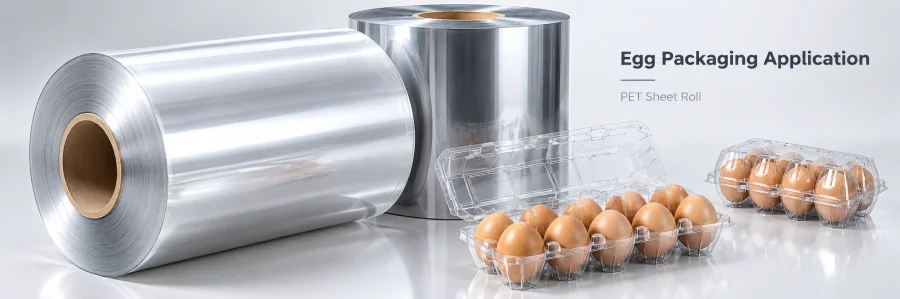
01 Why PET Sheet Is Used for Clear Egg Packaging
Clear plastic egg cartons are a familiar sight in retail packaging. Unlike opaque paper-pulp cartons, transparent PET packaging allows customers to inspect the eggs without opening the box.
For a thermoforming manufacturer, the appeal of PET goes beyond transparency. The material offers a useful balance of rigidity, surface appearance and thermoforming capability, making it a practical choice for packaging with multiple formed cavities.
When reviewing PET sheet for egg packaging, we usually focus on four material characteristics:
- Clarity and visual consistency: The sheet should provide a clean, transparent appearance without unacceptable haze, tint or visible defects.
- صلابة: The starting sheet needs suitable stiffness for the intended package, without assuming that increasing thickness is always the answer.
- Forming consistency: PET sheet must stretch into the required cavities while maintaining acceptable material distribution.
- Stable sheet quality: Consistent thickness, surface condition and roll winding help support continuous thermoforming production.
These properties are closely related, but they are not interchangeable. A sheet with excellent clarity is not automatically the best option if its gauge or forming behavior is unsuitable for the converter’s existing equipment.
02 Virgin APET or RPET: Which Material Makes More Sense?
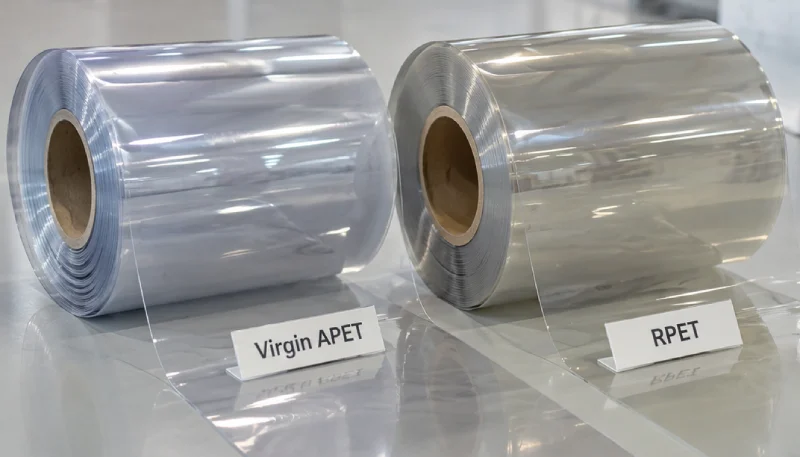
One of the first decisions is whether to use virgin APET or RPET. Both belong to the PET family and can be suitable for manufacturing transparent egg cartons.
The difference is not as simple as saying virgin PET is better and recycled PET is cheaper. What matters is the required appearance, recycled-content target and consistency of the particular sheet being purchased.
| What to Compare | Virgin APET Sheet | ورقة rpet |
|---|---|---|
| الشفافية | Generally offers consistent, clear appearance. | Can provide good clarity, depending on recycled feedstock and sheet construction. |
| Color and inclusions | Usually easier to maintain uniform color and low levels of visible contamination. | Tint and visible inclusions may require closer control. |
| المحتوى المعاد تدويره | None when manufactured entirely from virgin raw material. | Can be supplied according to an agreed recycled-content requirement. |
| Forming performance | Suitable for thermoforming when the grade and specifications match the application. | Also suitable, provided material quality and forming consistency are controlled. |
| Key purchasing concern | Clarity, gauge consistency and material quality. | Recycled content, appearance acceptance and material consistency. |
When We Would Start with Virgin APET
If a customer is producing a clear retail egg box and wants a consistent transparent appearance across repeat orders, virgin APET is a reasonable starting point.
It can be particularly useful when slight color differences or visible inclusions would stand out in the finished packaging. Of course, clarity still depends on the actual sheet quality and production control.
When RPET Is Worth Considering
If recycled content is part of the purchasing specification, RPET is a practical option.
The important question is how much recycled material is required and what appearance standard the packaging needs to meet. Different RPET constructions can have different levels of tint, visible inclusions and forming consistency.
Rather than judging RPET by its name alone, we recommend comparing representative sheet samples and confirming the recycled percentage, visual requirements and relevant documentation before ordering.
You can also review our RPET SHOPER ROLL و ورقة الحيوانات الأليفة واضحة لدرج البيض product information.
03 PET Sheet Properties That Matter in Production
Once the material type is settled, the next step is getting the sheet specification right. For an existing thermoforming line, we would rather review the current sheet grade and dimensions than recommend a new thickness based only on the words “egg packaging.”
Thickness: Start with the Actual Application
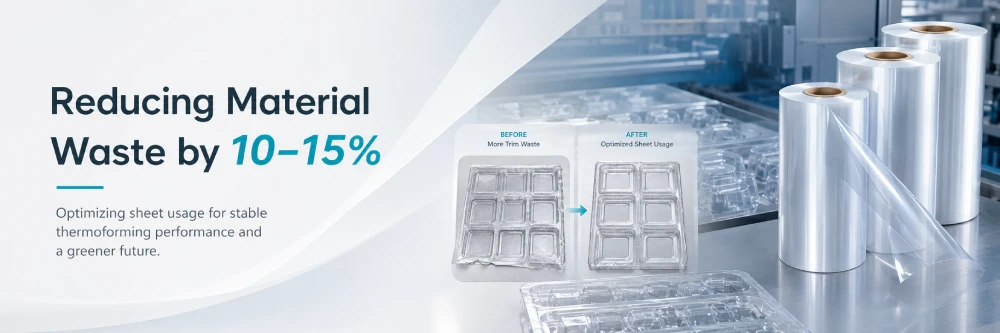
Customers sometimes ask whether a thinner PET sheet can reduce material consumption without affecting packaging quality. It is a reasonable question, but the answer depends on how the sheet is formed.
Egg cartons typically contain multiple cavities. As PET sheet stretches during thermoforming, some areas become thinner than the original gauge, particularly around deeper sections and tight transitions.
For this reason, we prefer to know the existing sheet thickness, approximate forming depth and required stiffness before discussing a different gauge. A change that works for a shallow package may not suit a deeper one.
Gauge Consistency and Material Stability
The nominal thickness on a specification sheet is only part of the picture. Consistency across the sheet width and along the roll also matters, especially in continuous production.
Variations in gauge can affect heating and material distribution during forming. When comparing suppliers, confirm the required thickness tolerance and evaluate samples under the actual line conditions.
Clarity and Surface Quality
Clear egg cartons make surface defects easier to notice. Haze, scratches, unwanted tint and visible inclusions can affect the appearance of the finished packaging.
For repeat purchases, it helps to agree on a realistic visual standard. This is particularly useful when switching from virgin APET to RPET or changing the recycled-content requirement.
Sheet Width, Roll Diameter and Winding
A suitable PET grade can still create unnecessary problems if the roll specifications do not match the thermoforming line.
Besides thickness and width, we recommend confirming roll diameter, core dimensions, winding requirements and any equipment restrictions. These details are especially useful when replacing an existing supplier or introducing a new sheet grade.
Providing the current roll specification is often the quickest way to start a meaningful material discussion.
04 Matching PET Sheet to Different Egg Packaging Needs
Not every egg packaging project needs the same sheet construction or performance priorities. The application helps us understand which material properties deserve the most attention.
| Application Situation | What to Prioritize in the Sheet |
|---|---|
| Clear retail egg cartons | Transparency, controlled tint, surface appearance and suitable rigidity. |
| Deeper formed cartons | Starting gauge, forming consistency and wall-thickness distribution. |
| Recycled-content packaging | RPET content, visual standards and material documentation. |
| Continuous high-volume production | Gauge consistency, stable sheet quality, roll width and winding performance. |
For example, a customer changing from a shallower carton to a deeper design may need to review starting thickness and forming behavior. A customer moving from virgin APET to RPET may be more concerned about appearance consistency and recycled-content documentation.
These are different material purchasing questions, even though both projects involve egg packaging.
Is PET the Only Material Option?
No. PS and HIPS can also be used in certain thermoformed egg packaging applications, particularly where an opaque appearance is acceptable.
Each material has its own balance of rigidity, impact behavior, processing requirements and cost. If clear retail display is the primary goal, PET and RPET are natural options to evaluate.
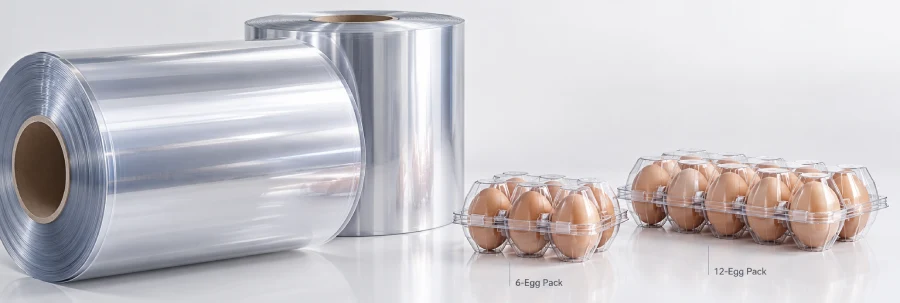
05 What to Tell Your PET Sheet Supplier Before Ordering
You do not need a complete technical specification to start an inquiry. But a few practical details help us understand what you actually need and avoid recommending a sheet that does not match your production line.
PET / RPET Sheet Roll RFQ
- Material choice: Virgin APET or RPET, including any recycled-content target.
- سمك الورقة: Existing or target gauge and required tolerance, if known.
- Roll dimensions: Required width, diameter, core size and winding details.
- مظهر: Transparent or tinted sheet, with relevant visual requirements.
- طلب: Egg carton type, approximate size and forming depth.
- Processing conditions: Equipment requirements or problems with the current sheet.
- التوثيق: Recycled-content claims and applicable compliance requirements.
- Purchase details: Estimated order volume, destination and sampling needs.
If you are already using another PET sheet, sharing its specification is a good starting point. If you are developing a new egg carton, a drawing or reference sample can help us understand the intended forming requirements.
For a material change, we recommend comparing representative samples before confirming a commercial order. This helps both sides agree on appearance, gauge and processing expectations from the beginning.
06 الأسئلة المتداولة
Can I replace virgin APET with RPET without changing the sheet thickness?
Possibly. If the RPET grade has suitable properties, the same starting gauge may work. However, appearance and forming performance should be checked before making a full production switch.
Does using thicker PET sheet always improve egg packaging?
Not necessarily. A thicker gauge adds material, but the finished package also depends on forming depth and material distribution. The goal is an appropriate specification, not simply the highest thickness.
Can DESU customize PET sheet width and roll dimensions?
Yes. DESU supplies customizable PET sheet rolls. Share your required thickness, width, roll diameter and core dimensions so we can review compatibility with your production requirements.
What if I do not know the correct PET sheet specification?
Send us your existing sheet information, egg carton sample or approximate package dimensions. These details provide a starting point for discussing material and gauge options before sampling.
07 Discuss PET or RPET Sheet Rolls with DESU
Whether you are sourcing transparent virgin APET sheet, evaluating RPET or looking for a new PET roll supplier, DESU can review your material and production requirements.
We manufacture thermoforming PET sheet and rolls for packaging converters. Send us your target thickness, sheet width, roll specifications and intended application to discuss available material options.
Have an existing specification or sample? Share it with our team for review.
Contact DESU Plastic →